
Essentials / Essentials
This article may contain affiliate linksLearn moreSurvival Japan: The Ultimate Earthquake Kit for Foreigners (Amazon Guide 2026)
Published on February 11, 2026
Updated on June 11, 2026
Author:Yushi Yamamoto

Essentials
Updated against official, partner, and reviewed site evidence where available.
Last updated: June 11, 2026
Official or partner facts are separated from practical notes.
Prices, screening, documents, and rules can change.
Some next-step links may be monetized.
Needs review: Approval, visa/tax/legal, availability, and campaign terms are not guaranteed. Confirm on the official or partner page.
Great for LINE / WhatsApp sharing
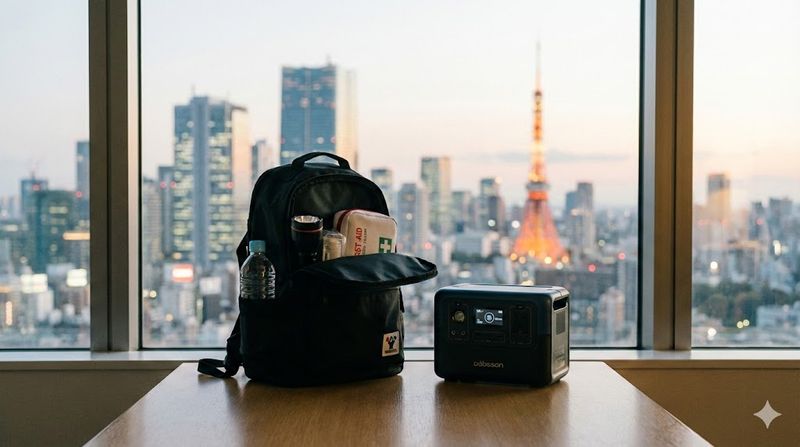
If a massive earthquake hits Tokyo tomorrow, and your phone screams an alert in Japanese you can't read, are you ready?
For foreign residents in Japan, a disaster isn't just about physical danger—it's about informational isolation. Most Japanese disaster manuals assume you read Kanji, eat rice three times a day, and have a local family network.
They don't tell you that losing your Zairyu Card (Residence Card) can mean losing your legal status. They don't warn you that evacuation shelters might not have Halal or Vegetarian food.
This guide is a survival strategy tailored for the international community in Japan. We will build a "Foreigner-Proof" Emergency Kit using Amazon.co.jp, focusing on the "72-Hour Wall"—the critical three days you need to survive on your own.
Don't just buy a bag and forget it. As a foreigner, you need to customize your kit to protect your ID, your power supply, and your sanity.
The smartest move is to buy a cost-effective "Base Kit" to handle the basics, and then spend your budget on the critical Add-ons (Power & Special Food).
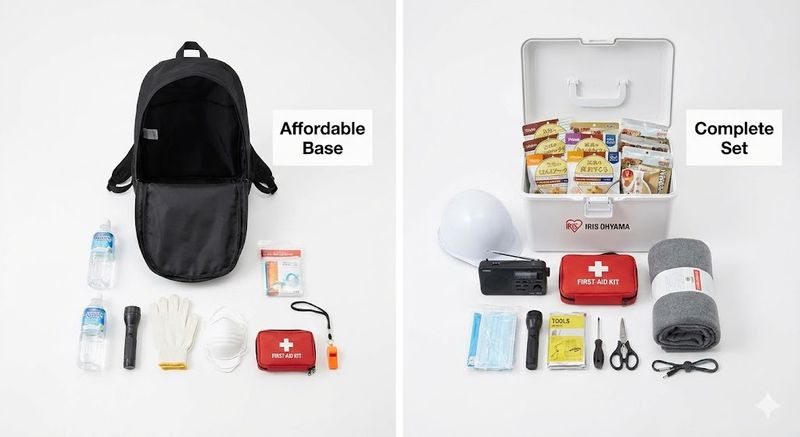
For the foundation, we recommend the YAMAZEN set. It is the most popular starting point because it covers the basics like water bags, simple toilets, and tools without breaking the bank.
Cheap, lightweight, and black. It is the perfect 'shell' to start your preparation. It saves you hours of shopping for 30 small individual items.
The most cost-effective starting point for your survival kit. Includes the backpack and 30 basic survival tools.
If you prefer a "one-click" solution that includes Japanese-style food and water, the IRIS OHYAMA set is a premium alternative.
A more complete set that includes standard Japanese emergency food and water.
In 2026, electricity is life. If your smartphone dies, you lose your translation tools (Google Translate/DeepL) and your maps. A small mobile battery is not enough for 72 hours. You need a Portable Power Station.
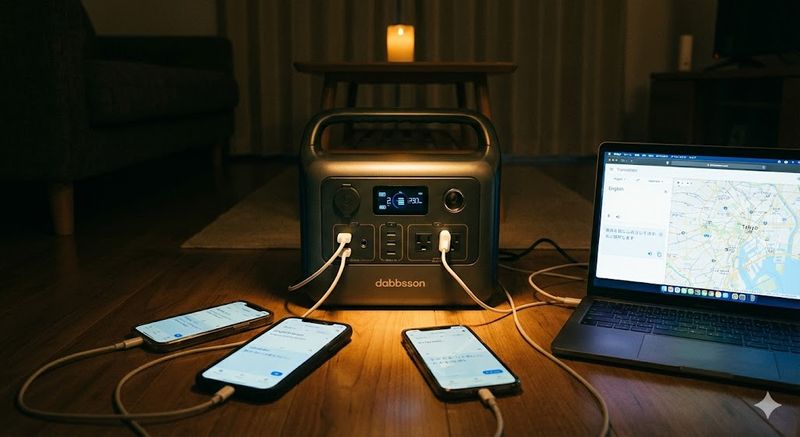
The Dabbsson DBS 600L uses semi-solid state LiFePO4 batteries. It is incredibly safe—it won't catch fire even if damaged in a quake—and can keep your phone charged for over a week or run an electric blanket during a winter power outage.
Top-tier safety with 768Wh capacity. Often available with a 50% discount coupon on Amazon.
If you need something lighter to carry to a shelter, the BLUETTI EB3A is the industry standard for portability.
Compact, lightweight, and fits in a large backpack. Reliable backup for your critical devices.
Standard kits only have 3 toilet bags. This is not enough. For 3 days, you need at least 15-20 bags per person. The BOS set is legendary in Japan for its odor-blocking technology.
Simply the best odor-proof bags in Japan. Essential for maintaining hygiene in an apartment.
Gas and electricity might stop. The Tiger Magic Kamado cooks perfect rice using only newspaper as fuel. No gas canisters required.
Cooks warm rice using only newspaper. The ultimate backup for food security.
For basic calories, Onisi Alpha Rice is the gold standard. You just add water.
Long shelf life and easy preparation. The standard Japanese survival food.
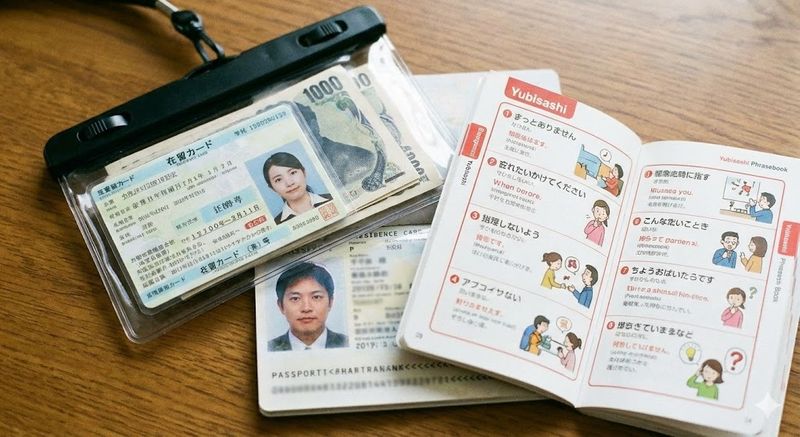
Action Item: Photocopy your Zairyu Card (Residence Card) and Passport. Keep them in a waterproof bag inside your backpack. Also, keep 20,000 yen in cash (mostly 1,000 yen bills and 100 yen coins) because credit cards won't work during a blackout.
If the internet goes down, your phone's translation apps might fail. The "Yubisashi" (Point-and-Speak) Guide is your analog lifeline.
An essential analog backup for when translation apps fail. Communcate by pointing at pictures.
Always have a high-capacity mobile battery in your pocket for immediate evacuation. Anker is the most reliable brand in Japan.
Massive capacity in a pocket size. Reliable backup for your smartphone.
Earthquakes in Japan are not a matter of "if," but "when." When the shaking starts, it is too late to order from Amazon.
Your Action Plan:
The delivery truck that arrives tomorrow brings more than just boxes; it brings the confidence that you are ready to survive in Japan.
You might need this information again. Bookmark this page to access it anytime.
Receive important updates about visa requirements and new residence statuses directly to your inbox.
Reading this in English?
Help improve English guides like this
If this guide helped but a phrase felt unnatural, your native check can make the next English article clearer for foreign residents in Japan.
A: Japan experiences thousands of minor earthquakes per year. Major damaging earthquakes are less frequent but do occur. Foreigners should be prepared: the Japanese government recommends having a 3-day emergency kit as a minimum.
A: Essentials include: water (2 liters/person/day for 3 days), emergency food (ready-to-eat), a flashlight and extra batteries, a first aid kit, a portable battery charger, copies of your Residence Card and passport, and cash in small bills. A warm blanket and dust mask are also recommended.
A: Amazon Japan, Tokyu Hands, and home centers like Cainz and Kohnan carry complete emergency kits. Pre-assembled "防災セット" (bosai setto / disaster preparedness sets) start at around ¥5,000 and are available online and in stores.
A: Yes. Japan issues J-Alert emergency broadcasts, and most smartphones with a Japanese SIM receive earthquake early warnings (緊急地震速報) via a loud alarm tone. The Tokyo Metropolitan Government also provides safety guidance in English at www.metro.tokyo.lg.jp.
A: Follow the "Drop, Cover, Hold On" method during shaking. After the quake: check for injuries, shut off gas at the meter, and tune in to NHK World Radio (English) or check the Tokyo Metropolitan Disaster Management website for guidance. Register at your embassy or consulate if instructed.

CEO / Native Japanese Expert
Updated on: June 11, 2026
※ The information in this article is accurate as of the time of writing. Laws and regulations may change, so please always check official sources for the latest information. We assume no liability for any damages resulting from the content of this article.


