
Essentials / Essentials
This article may contain affiliate linksLearn moreHow to Open a Bank Account in Japan as a Foreigner (2026): No 6-Month Wait
Published on November 25, 2025
Updated on June 21, 2026
Author:Yushi Yamamoto

Essentials
Updated against official, partner, and reviewed site evidence where available.
Last updated: June 21, 2026
Official or partner facts are separated from practical notes.
Prices, screening, documents, and rules can change.
Some next-step links may be monetized.
Needs review: Approval, visa/tax/legal, availability, and campaign terms are not guaranteed. Confirm on the official or partner page.
Recommended next step
Bank setup often stalls at SMS verification and moving money, so these actions stay close to the decision point.
Before applying, check the destination page for current eligibility, from-abroad or domestic application options, required documents, and support languages.
This page contains affiliate links. We may earn a commission from purchases or sign-ups, at no extra cost to you. Learn more
Great for LINE / WhatsApp sharing
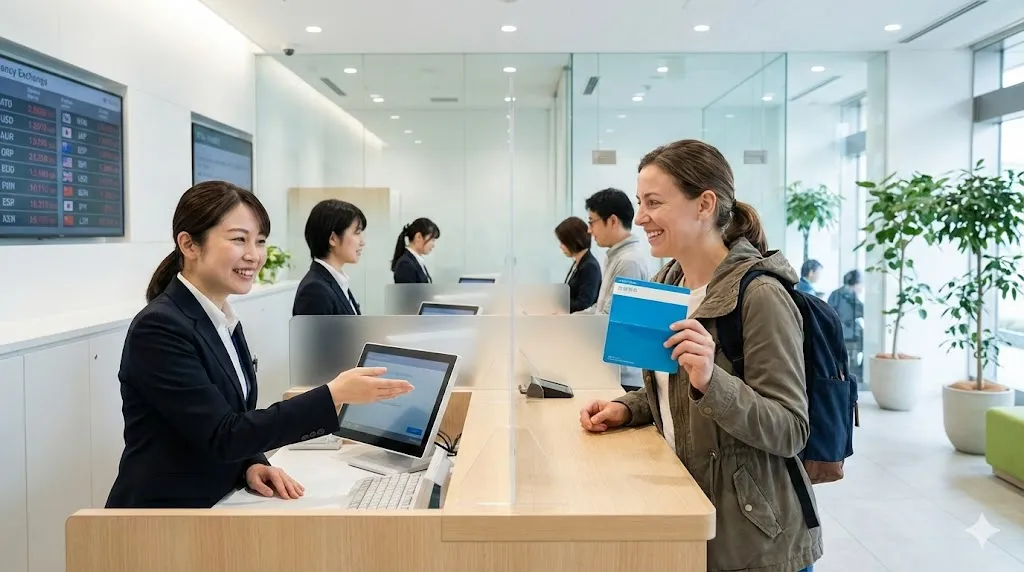
Quick answer: For most foreigners who have been in Japan for less than 6 months, the fastest way to open a bank account is Japan Post Bank (Yucho) via the "Yucho Tetsuzuki App" — you need a Residence Card with your address printed on the back, a Japanese phone number in your own name, and a visa with 3+ months remaining. If you are employed in Japan, SBI Shinsei Bank can waive the 6-month rule with proof of employment. For sending money, use Wise instead of bank transfers to avoid "non-resident" fees.
Last updated: 2026-06-11
Opening a bank account is one of the first steps in our First Week in Japan Checklist — right after getting a SIM card with a Japanese phone number.
"Moving to Japan, the first challenge wasn't the language. It was opening a bank account."
This is a sentiment shared by many foreigners we interviewed. You may have already experienced being told "No" at a bank counter. Or perhaps you are overwhelmed by a mountain of complex paperwork.
Rest assured, it's not because of your Japanese ability. The Japanese banking system operates under strict "Foreign Exchange Act" regulations to prevent money laundering.
However, with the right knowledge and strategy, you can break through this wall. This guide presents the "only correct answer" on which bank to choose for the fastest approval, based on real reviews from senior expats.
⚠️ ID rule change (since December 1, 2025) The paper Health Insurance Card is no longer accepted as a valid ID at banks. Bring your Residence Card (and My Number Card if you have one) instead.
90% of rejections at bank counters are due to this rule.
Under Japanese law (Foreign Exchange and Foreign Trade Act), foreigners who have been in Japan for less than 6 months are defined as "Non-Residents." Since standard savings accounts at Japanese banks are designed for "Residents," legally, they cannot offer regular accounts to Non-Residents (or can only offer accounts with limited functions).
Yes. There are two main routes.
| Your Situation | Recommended Bank | Success Rate |
|---|---|---|
| Student / Unemployed (< 6 months) | Japan Post Bank (Yucho) | ⭐⭐⭐⭐⭐ |
| Employee (< 6 months) | SBI Shinsei Bank or Yucho | ⭐⭐⭐⭐ |
| Anyone (> 6 months) | Rakuten Bank, SBI Shinsei, etc. | ⭐⭐⭐⭐⭐ |
Before going to the bank, ensure you have these four items. Missing even one will result in being sent home immediately.
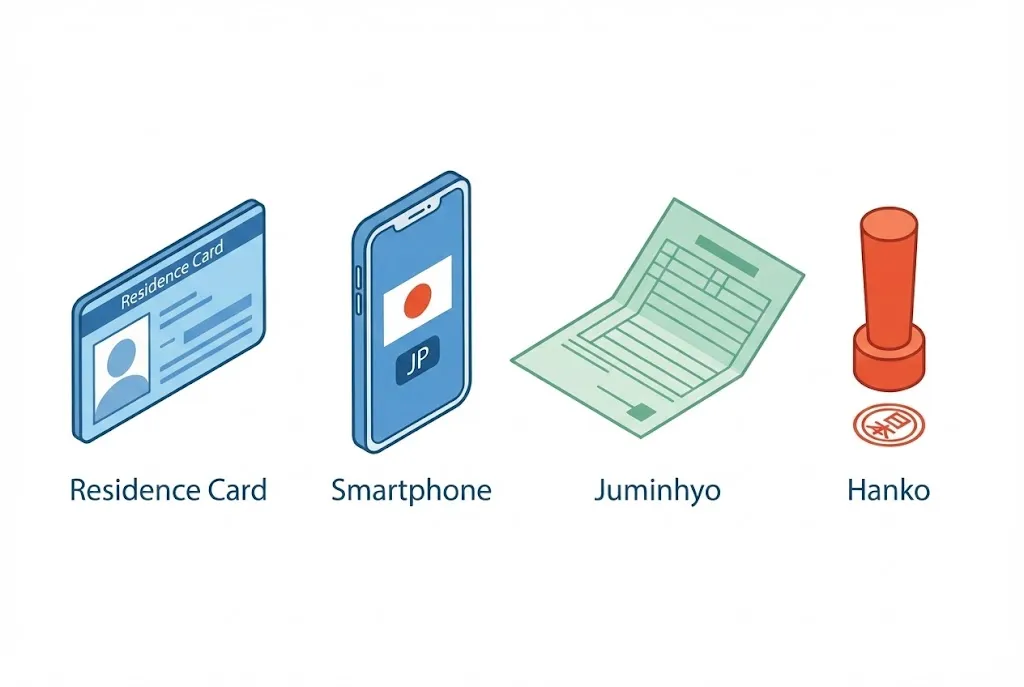
This is the core of your ID.
Many foreigners stumble here. Banks require a "Japanese mobile number (090/080/070) where you can be contacted."
Solution: Get a SIM card you can contract without a bank account first. These are the "keys" to opening a bank account.
💡 Recommended SIMs Without a Bank Account Only the following two companies can solve the "No bank, no phone / No phone, no bank" dilemma.
- Mobal SIM: No credit card required. Contract with just a passport.
- GTN Mobile: Specialized for foreigners. Convenience store payment OK.
Some banks (especially when opening at a counter) require this. Follow the bank's instructions regarding whether to include your My Number (Individual Number).
"Do I still need a stamp?" — The situation is changing.
Here are the "Success Stories" and "Failures" from foreign residents in Japan, gathered from Reddit and X (Twitter).
Reddit User (2025) "Successfully opened a Yucho account in my first week. The app has English, and it was much less stressful than being bombarded with Japanese at the counter."
X User (Company Employee) "I showed my employee ID, and even SBI Shinsei Bank waived the '6-month rule'! If you are an employee, bringing proof of salary deposit is the strongest shortcut."
Reddit User (The Biggest Trap) "Rejected 3 times on the Yucho App. The reason? 'Katakana Name Input.' My Residence Card only has English, but the app demands perfect Katakana input. If you're not confident, going to the counter is faster."
Reddit User (Student) "I opened an account within 6 months, but there was a trap. Because it's treated as a 'Non-Resident Account,' when I tried to transfer money domestically (to pay rent), they tried to charge me 7,500 yen as an 'International Transfer' fee. Until 6 months pass, it's just a 'Cash Box'."
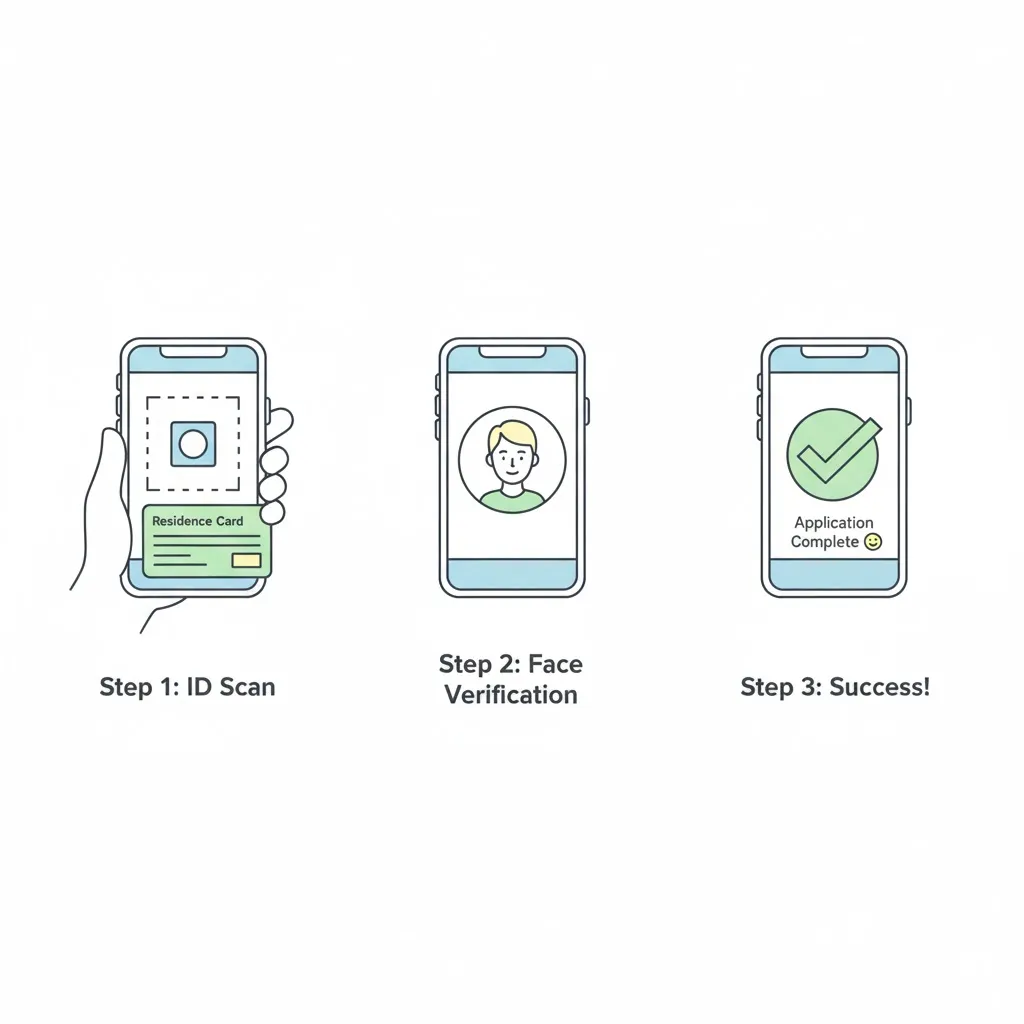
Here is how to open an account using the "Yucho Tetsuzuki App," which has the highest success rate.
Opening a bank account is not the "Goal," it's the "Start." However, many people fall into the "Fee Trap" here.
Accounts opened within 6 months of arrival are legally treated as "Non-Resident Accounts." During this period, ATM withdrawals are free, but if you try to transfer money to another bank (e.g., for rent), it may be treated as an "International Transfer" even if it's domestic, costing thousands of yen (sometimes 7,500 yen!).
So, what should you do?
When sending money from your home country to Japan, or moving funds domestically, using a bank counter takes days and costs high fees. Wise allows for fast transfers with low fees, regardless of your "Non-Resident" status.
The smart foreigner's strategy is to use the newly opened bank account as a "place to receive salary" and leave transfers to Wise.
Register for Wise to get a fee-free transfer coupon for up to 75,000 yen and avoid the bank's non-resident fees. Used by 16 million people worldwide.
Yes. Japan Post Bank (Yucho) accepts newcomers with a visa of 3+ months remaining, and SBI Shinsei Bank can treat you as a "Resident" if you can prove employment in Japan. Note that accounts opened in your first 6 months are legally "non-resident" accounts with limited transfer functions.
Four items: your Residence Card with your current address printed on the back, a Japanese mobile number (090/080/070) in your own name, a Certificate of Residence (Juminhyo) for some counter applications, and a hanko (personal seal) for counter applications at Japan Post Bank. App-based applications usually skip the hanko.
Yes. The "Yucho Tetsuzuki App" supports English, Vietnamese, Chinese, and other languages, and SBI Shinsei Bank offers English online banking. Bank counters, however, operate mostly in Japanese.
The most common causes: your Katakana name input differs from what the bank expects (even by one character), less than 3 months remaining on your visa, your address input doesn't exactly match your Residence Card, or you already have a Yucho account (one per person). If the app rejects you repeatedly, apply at the counter instead.
Accounts opened within 6 months of arrival are treated as "Non-Resident Accounts." Domestic transfers can be processed as international transfers, costing up to ¥7,500 per transfer. Use the account to receive salary, and use a transfer service for moving money until the 6-month mark passes.
Opening a Japanese bank account is indeed a high hurdle for foreigners. However, if you follow this guide, you will succeed.
Your Action Plan:
With these 4 steps, your financial life in Japan will be free. Good luck!
You might need this information again. Bookmark this page to access it anytime.
A practical 14-day checklist for city hall, utilities, SIM, internet, and moving tasks.
Reading this in English?
Help improve English guides like this
If this guide helped but a phrase felt unnatural, your native check can make the next English article clearer for foreign residents in Japan.
A: Yes. Japan Post Bank (Yucho) accepts newcomers with a visa of 3+ months remaining, and SBI Shinsei Bank can treat you as a Resident if you can prove employment in Japan. Accounts opened in your first 6 months are legally non-resident accounts with limited transfer functions.
A: Four items: your Residence Card with your current address printed on the back, a Japanese mobile number (090/080/070) in your own name, a Certificate of Residence (Juminhyo) for some counter applications, and a hanko (personal seal) for counter applications at Japan Post Bank.
A: Yes. The Yucho Tetsuzuki App supports English, Vietnamese, Chinese, and other languages, and SBI Shinsei Bank offers English online banking. Bank counters, however, operate mostly in Japanese.
A: Common causes: your Katakana name input differs from what the bank expects, less than 3 months remaining on your visa, your address input doesn't exactly match your Residence Card, or you already have a Yucho account. If the app rejects you repeatedly, apply at the counter instead.
A: Accounts opened within 6 months of arrival are treated as Non-Resident Accounts. Domestic transfers can be processed as international transfers, costing up to ¥7,500 per transfer. Use the account to receive salary and use a transfer service for moving money until the 6-month mark passes.

CEO / Native Japanese Expert
Updated on: June 21, 2026
※ The information in this article is accurate as of the time of writing. Laws and regulations may change, so please always check official sources for the latest information. We assume no liability for any damages resulting from the content of this article.


