
Money & Cards / Money & Cards
This article may contain affiliate linksLearn moreCashless Japan 2026: PayPay vs. Rakuten Pay - Which App Should You Download?
Published on January 24, 2026
Updated on July 27, 2026
Author:JapanLifeStart Editorial Team

Money & Cards
Updated against official, partner, and reviewed site evidence where available.
Last updated: July 27, 2026
Official or partner facts are separated from practical notes.
Prices, screening, documents, and rules can change.
Some next-step links may be monetized.
Needs review: Approval, visa/tax/legal, availability, and campaign terms are not guaranteed. Confirm on the official or partner page.
Great for LINE / WhatsApp sharing
Did you come to Japan hearing that "Cash is King"? It is true that old ramen shops and rural clinics often still only accept cash. However, Japan in 2025 has changed dramatically. You can now complete 90% of your daily life using just your smartphone.
PayPay, Rakuten Pay, LINE Pay, d-Barai... There are countless payment apps in Japan, but as a foreigner living here, you really only need two.
Here is why you need these two, and the "correct" way to use them together.
If you can only download one app, choose PayPay without hesitation. The reason is simple: "It is accepted at the overwhelming majority of shops."
Note: To register for PayPay, a "Japanese phone number (070/080/090)" capable of receiving SMS is required. If you don't have a number yet, check the article below to get a SIM Card.
If PayPay is the app for "spending," Rakuten Pay is the app for "earning." You should always use this app at major chains like 7-Eleven, FamilyMart, Seiyu Supermarket, and Matsumotokiyoshi.
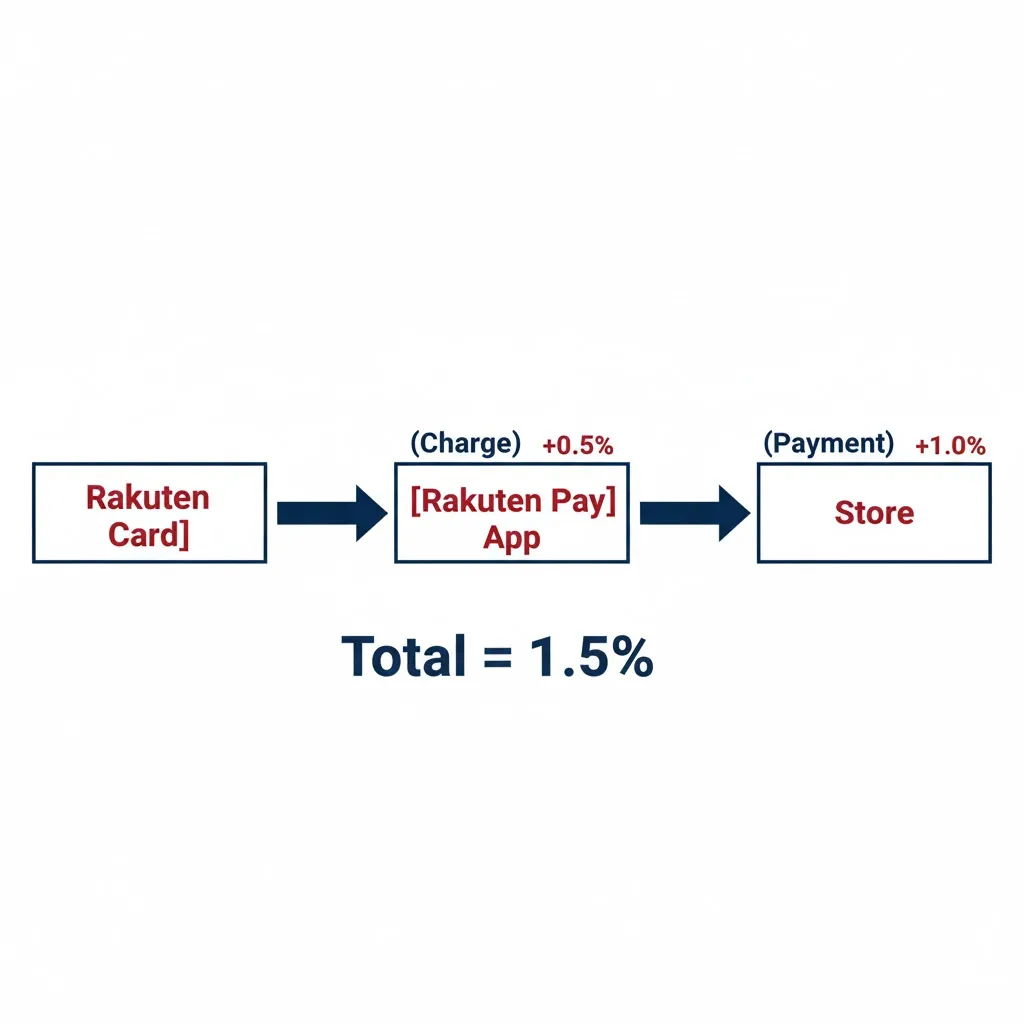
Smart foreign residents use the apps like this:
Many foreigners try to register their credit cards from their home countries (US, Europe, etc.) to these apps and fail.
If you are living in Japan, you should get a Rakuten Card as soon as possible. Not only does it maximize your points with Rakuten Pay, but it can also be registered as a payment source for PayPay (if it is a VISA/Mastercard brand).
🚀 Get the Strongest Cashless Card
To get the 1.5% return on Rakuten Pay, a Rakuten Card is essential. Here is how to apply (it is known for being foreigner-friendly).
👉 [Practical Guide] How to Apply for a Rakuten Card: English Tips & Avoiding Rejection
| Feature | PayPay 🔴 | Rakuten Pay 🐼 |
|---|---|---|
| Best For | Small shops, Splitting bills | Supermarkets, Konbini, Drugstores |
| Point Rate | 0.5% (Basic) | 1.5% (Requires Rakuten Card) |
| Foreign Card | Limited (Low monthly cap) | No point benefits |
| Cash Charge | OK (Seven Bank ATM) | OK (Seven Bank ATM) |
| Send Money | Best (Everyone uses it) | Average |
| Bill Payment | Supports utility bills | Partially supported |
Q1: Can I use these without a bank account? Yes, both can be charged with cash at Seven Bank ATMs (inside 7-Eleven). However, charging cash every time is a hassle, so we recommend getting a bank account or credit card soon.
Q2: Does PayPay ever give more than 0.5%? Yes! Check the PayPay app home screen for the monthly "Matsuri" (Festival) campaigns. In specific towns or regions, you can sometimes get 20-30% points back to support local businesses. Don't miss these notifications.
Q3: Is the Rakuten Card review strict for foreigners? No, the Rakuten Card is known as one of the most accessible cards for foreigners. As long as you don't make mistakes on the application form, many students and workers successfully get one. Please refer to the guide below for details.
Don't overcomplicate it. Download PayPay so you can pay anywhere. Download Rakuten Pay + Rakuten Card to save 1.5% on your living costs.
1.5% might seem small, but when calculated against your annual food and daily necessities, it adds up to thousands or tens of thousands of yen. That is enough for a nice dinner or to help pay for a flight home.
🔥 Start Your Point Life Today
Stop losing money by paying with cash. Get a Rakuten Card and start your 1.5% cashback life.
👉 [Practical Guide] How to Apply for a Rakuten Card: English Tips & Avoiding Rejection
Related money task
This internal guide does not decide individual eligibility; it helps organize document prep and software options.
Open the tax return software guideYou might need this information again. Bookmark this page to access it anytime.
Receive important updates about visa requirements and new residence statuses directly to your inbox.
Reading this in English?
Help improve English guides like this
If this guide helped but a phrase felt unnatural, your native check can make the next English article clearer for foreign residents in Japan.


![[2026 Comparison] Rakuten Point vs V Point vs d POINT](/_next/image?url=https%3A%2F%2Fcdn.sanity.io%2Fimages%2Fs5zbl9nu%2Fproduction%2F64764f87e0bd63725773de1998f35969485517e2-1200x630.jpg%3Fauto%3Dformat%26q%3D72%26fit%3Dmax%26w%3D640&w=3840&q=75)
A: PayPay has the highest acceptance rate in Japan (over 4 million merchant locations). IC card payments (Suica/PASMO on iPhone or Android) are accepted at transit, convenience stores, and many retail chains. LINE Pay and d払い are also widely used. PayPay is the safest choice for most daily purchases.
A: PayPay can be linked to a foreign credit card (Visa, Mastercard) for charging, though some foreign card restrictions apply. Easiest for foreigners: link to a Japanese bank account (Japan Post Bank works well) or charge via convenience store. Some features require a Japanese phone number and My Number.
A: Suica is a prepaid IC card primarily for transit (trains, buses) that also works at convenience stores and some retail. PayPay is a QR code payment app accepted at a much wider range of stores including restaurants and specialty shops. Many people in Japan use both for different situations.
A: A Japanese credit card is ideal for linking to Japanese payment apps. However, Visa and Mastercard foreign credit cards usually work for initial setup of PayPay, though some issuers block it. A Rakuten Card or Japan-issued credit card bypasses this problem entirely and earns Rakuten points.
A: iPhone: open the Wallet app → + → Suica → charge with a card (foreign Visa/Mastercard works). Android: install the Suica app from Google Play. You can charge Suica at any ATM or station machine with cash, or link a credit card for auto-charge.

CEO / Native Japanese Expert
Updated on: July 27, 2026
※ The information in this article is accurate as of the time of writing. Laws and regulations may change, so please always check official sources for the latest information. We assume no liability for any damages resulting from the content of this article.