
Essentials / Essentials
This article may contain affiliate linksLearn more[Ultimate Guide] Japan Life Startup: Complete Checklist for Your First Week
Published on February 3, 2026
Updated on June 11, 2026
Author:Yushi Yamamoto

Essentials
Updated against official, partner, and reviewed site evidence where available.
Last updated: June 11, 2026
Official or partner facts are separated from practical notes.
Prices, screening, documents, and rules can change.
Some next-step links may be monetized.
Needs review: Approval, visa/tax/legal, availability, and campaign terms are not guaranteed. Confirm on the official or partner page.
Great for LINE / WhatsApp sharing
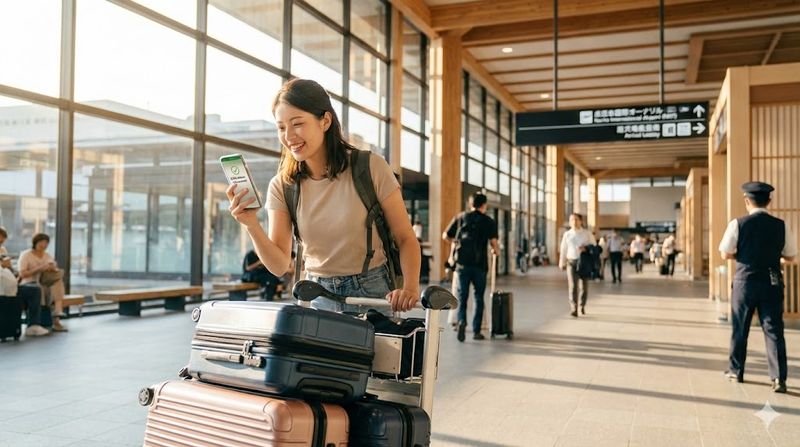
The moment they arrive in Japan, many foreigners face a frustrating "Chicken and Egg" trap:
"You need a phone number to open a bank account." "You need a bank account to get a phone contract."
This infinite loop causes countless people to waste their first week. However, if you know the correct route, you can unlock this deadlock on your very first day.
In this article, we reveal the latest 2026 administrative rules and the "Golden Route" recommended by foreigner support professionals. This is a chronological checklist designed to help you start a "normal life" in as little as 3 days, with zero wasted fees or waiting time.
Before going to the City Hall, the most critical phase is securing a "Contact Number" and an "Address." Getting this order wrong is the main reason procedures get delayed by weeks.
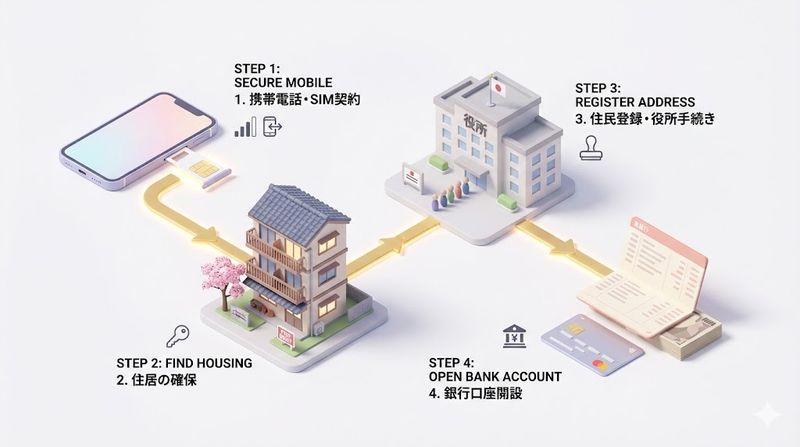
Every major action in Japan (City Hall registration, apartment contracts, job applications) requires a "Japanese Phone Number (070/080/090)."
However, major carriers and many budget SIMs require a "Residence Card with a registered address" or a "Japanese Bank Account" at the time of contract. This is the typical point of failure.
The solution is simple: Pick up a "SIM that can be contracted with just a Passport and a foreign Credit Card" at the airport.
You can pick up a 'Mobal SIM' at the counter immediately after exiting the arrival gate and get a phone number on the spot. Since there is no binding contract period or cancellation fee, you can easily switch to [Rakuten Mobile](/en/sim-wifi/rakuten-mobile-review) or others once you have a bank account. It is truly the strongest choice for your 'first SIM.'
No residence card needed, zero cancellation fees. Secure your phone number first to solve the 'Chicken and Egg' problem.
Staying in a hotel for too long will rapidly drain your funds. Furthermore, you cannot register as a resident or open a bank account using a hotel address.
While it is common knowledge that Japanese rental contracts have "strict screening" and "high initial costs (4-5 months' rent)," the smart strategy for the startup phase is to immediately decide on a property that requires "No Guarantor" and keeps "Initial Costs to the absolute minimum."
The 'fail-proof' rule is to keep costs low with Village House or a share house first, and then move to your ideal apartment once you get used to life here.
Zero deposit, key money, and fees. With flexible screening, this is the easiest property for foreigners to rent.
If you are looking for something even cheaper in Tokyo, specifically a furnished private room, check out The Truth About Cross House: Cheap Tokyo Housing where you can move in for an initial cost of ¥30,000.
Once your address and phone number are set, you must visit the municipal office (City Hall/Ward Office) of your residence area within 14 days of entering the country.
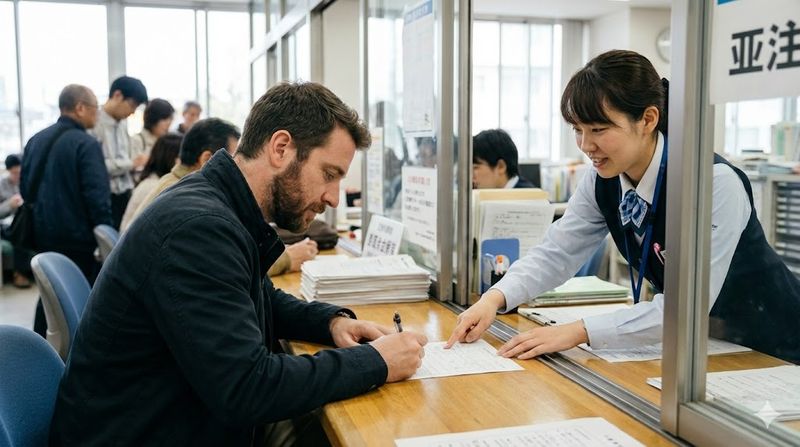
By submitting the "Move-in Notification," your address will be printed on the back of your Residence Card, allowing it to function as an official ID for the first time.
You will handle enrollment for National Health Insurance and National Pension at the same time as your move-in notification. If the bill looks too high, consult the counter staff about an "Exemption/Reduction Application" (Genmen Shinsei) immediately, as you likely had no income in Japan the previous year.
Many Japanese banks refuse to open accounts for foreigners who have been in the country for "less than 6 months." However, Japan Post Bank (Yucho Ginko) allows you to open an account as long as you have a Residence Card.
However, since JP Bank has high fees for international transfers, using Wise is essential for receiving living expenses from abroad.
Save up to 8x on international transfer fees with real-time exchange rates. Essential for receiving living expenses in Japan.
To build credit history in Japan, apply for a credit card early. The Rakuten Card has a very high approval track record for foreigners and is ideal as your first card.
Furthermore, there is a trick to secure the equivalent of "¥20,000 in cash" just by signing up via smartphone. For details, see the [Urgent] Guide to Securing Cash Immediately Upon Arrival.
No annual fee. Cover your first month's groceries and daily necessities with the new enrollment points.
Once your living foundation is set, the next step is income. Even if you are worried about your Japanese level, you can find work using the right sites.
In [2026 Edition] Job Site Comparison for Foreigners, we introduce the best agents categorized by N1 to N5 Japanese levels.
Starting life in Japan is not difficult if you follow the correct order.
If you stray from this "Golden Route," you risk falling into an infinite loop of bureaucratic red tape. Start with the first steps: securing a SIM and Housing.
Same-day contract with just a passport. This is the 'Key' to unlocking life in Japan.
Minimize initial costs. Check no-screening properties right now.
You might need this information again. Bookmark this page to access it anytime.
Receive important updates about visa requirements and new residence statuses directly to your inbox.
Reading this in English?
Help improve English guides like this
If this guide helped but a phrase felt unnatural, your native check can make the next English article clearer for foreign residents in Japan.
A: The correct order: (1) Register your address at City Hall to get it printed on your Residence Card back, (2) Get a Japanese SIM card with an 080/090 number, (3) Open a bank account (Yucho is easiest for newcomers under 6 months), (4) Arrange housing, (5) Enroll in health insurance and pension within 14 days of moving.
A: Most essentials take 1–2 weeks. SIM and address registration can be done Day 1. Bank account cards arrive by post in 1–2 weeks. Health insurance and pension enrollment should be done within 14 days of your move-in date.
A: You can get a Mobal or GTN SIM using just your passport, and research housing. Do not attempt to open a bank account until the Residence Card address field is filled in at City Hall.
A: Expect ¥200,000–500,000: apartment initial costs (deposit + key money + agency fee) typically equal 3–5 months of rent. Budget an additional ¥20,000–50,000 for furniture and ¥5,000–15,000 for SIM and utilities.
A: Yes. Mobal and GTN SIM applications, the Yucho Tetsuzuki App, SBI Shinsei Bank, and Best-Estate housing are all available in English. City Hall registration is in Japanese, but most offices have a basic English-language form.

CEO / Native Japanese Expert
Updated on: June 11, 2026
※ The information in this article is accurate as of the time of writing. Laws and regulations may change, so please always check official sources for the latest information. We assume no liability for any damages resulting from the content of this article.


