JapanLifeStartJapanLifeStart
EssentialsHousing & Daily LifeMoney & CardsWork & Study
JapanLifeStart logoJapanLifeStart

Multilingual support platform for living, studying and working in Japan.

  • SIM Card Comparison
  • Credit Cards
  • Bank Accounts
  • Apartment Hunting
  • Essentials
  • Housing & Daily Life
  • Money & Cards
  • Work & Study
  • About JapanLifeStart
  • Contact
  • Sitemap
  • Privacy Policy
  • Terms of Service
  • Ad Disclosure
  • Help Us Translate
  • Operator: Prodouga Corporation
© 2026 JapanLifeStart / 株式会社プロドウガ All rights reserved.
  1. Home
  2. /
  3. Housing & Daily Life
  4. /
  5. [The 2026 Problem] No Visa Renewal if Pension is Unpaid? Stricter Immigration Rules Under the New Takaichi Administration & Tax Steps Foreigners Must Take Now
Housing & Daily Life / Housing & Daily Life
This article may contain affiliate linksLearn more

[The 2026 Problem] No Visa Renewal if Pension is Unpaid? Stricter Immigration Rules Under the New Takaichi Administration & Tax Steps Foreigners Must Take Now

Published on December 8, 2025
Updated on June 21, 2026
Author:JapanLifeStart Editorial Team
A foreign woman standing before a Japanese immigration gate with red lights and a "STOP" sign, symbolizing the 2026 crisis of stricter visa renewal screening.
Portrait of Yushi Yamamoto, CEO of ibis
Yushi Yamamoto

CEO / Native Japanese Expert

Updated on: June 21, 2026

Housing & Daily Life

How this guide is checked

Updated against official, partner, and reviewed site evidence where available.

Last updated: June 21, 2026

Source separation

Official or partner facts are separated from practical notes.

Fast-changing details

Prices, screening, documents, and rules can change.

Affiliate link handling

Some next-step links may be monetized.

Needs review: Approval, visa/tax/legal, availability, and campaign terms are not guaranteed. Confirm on the official or partner page.

💌

Send to Friends (Summary)

  • •Visa renewal screening will tighten starting in 2026. Unpaid pension/residence tax or undeclared side income could lead to immediate rejection. We urgently explain the tax return and social insurance measures needed to protect your visa.

Great for LINE / WhatsApp sharing

"Visa renewal? I just need to have my company submit the documents and I'll be fine, right?"

If that is what you are thinking, 2026 might be the last year of your life in Japan.

In December 2025, the "Stricter Immigration Control" policy announced under the new Takaichi administration sent shockwaves through the foreign resident community. This is because the issue of unpaid pension and taxes, which was previously only strictly scrutinized for "Permanent Residency" applications, is now extremely likely to be applied to standard visa renewals (Engineer/Specialist in Humanities/International Services, etc.) as well.

"I didn't know" will no longer be a valid excuse. In this article, we explain the "Tax and Career Survival Strategy" you need to implement immediately to protect your residence status in the face of the 2026 Problem.

Why the "2026 Problem" Now?

Until now, Japan's immigration policy has been relatively "lenient" to compensate for labor shortages. However, the current trend is shifting clearly toward "Strict Legal Compliance."

The graph below shows the projected trend in visa renewal rejection rates accompanying stricter tax compliance measures.
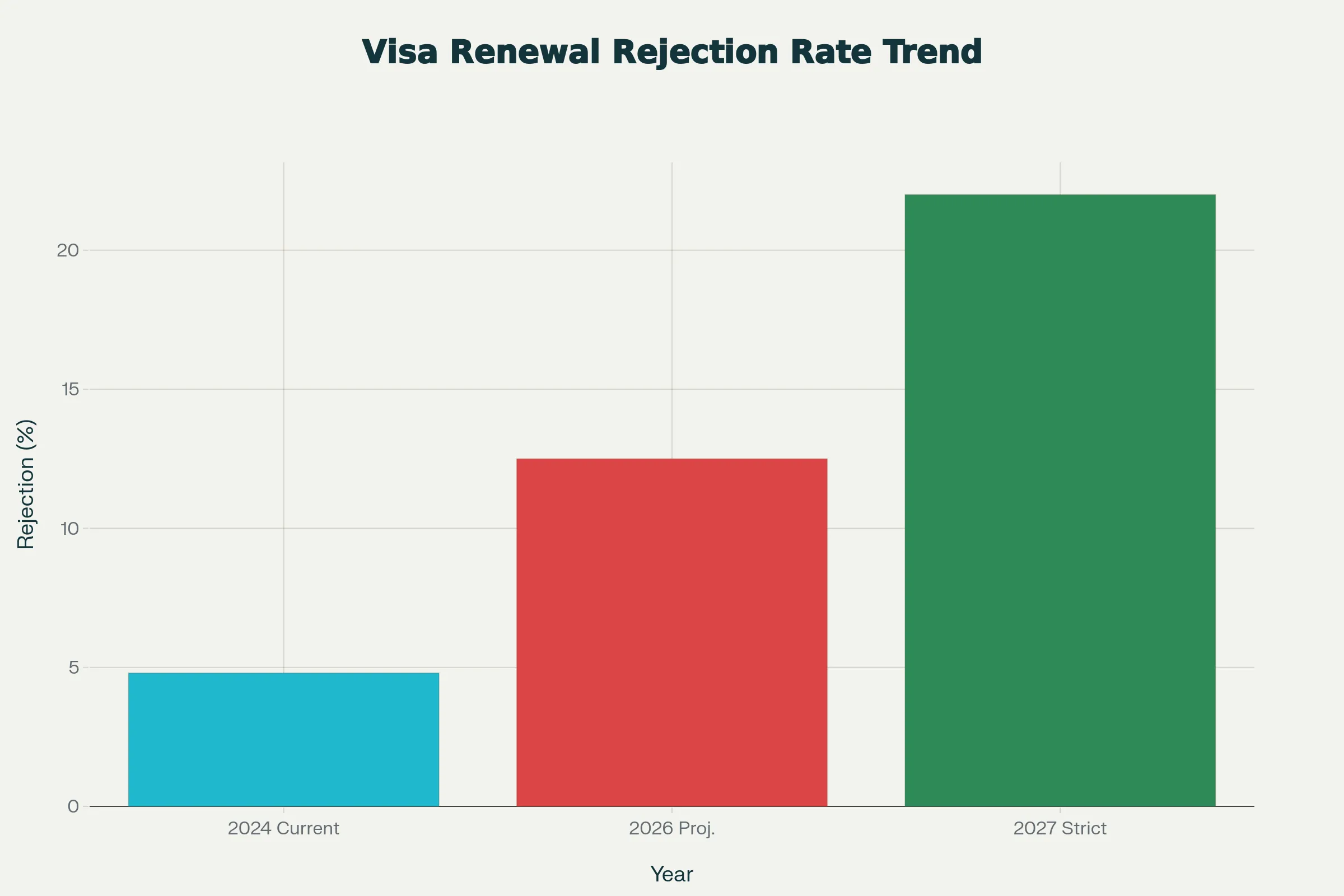
Projected Visa Rejection Rate Increase (2026 Estimate)

1. Strengthened Data Sharing Between Immigration and the NTA

Previously, it took time for the Immigration Services Agency to grasp an individual's detailed tax situation. However, with the integration of the My Number system, a mechanism is being finalized where "who owes how much tax and when" is shared instantly between the National Tax Agency and Immigration.

2. Redefinition of "Good Conduct"

The term "Good Conduct" (Soko Zenryo) is a requirement for visa renewal. Until now, this mainly meant "not having committed crimes," but moving forward, "paying Social Insurance premiums (Pension/Health Insurance) and Residence Tax on time" will become an essential condition.

You are at high risk if:

  • You ignore the pension payment slips (pink envelopes) and leave them unpaid.
  • You earn money from a side job but have not filed a tax return.
  • Your company does not enroll you in Social Insurance, and you are behind on National Health Insurance payments.

Risk Level 1: "Undeclared" Side Job & Freelance Income
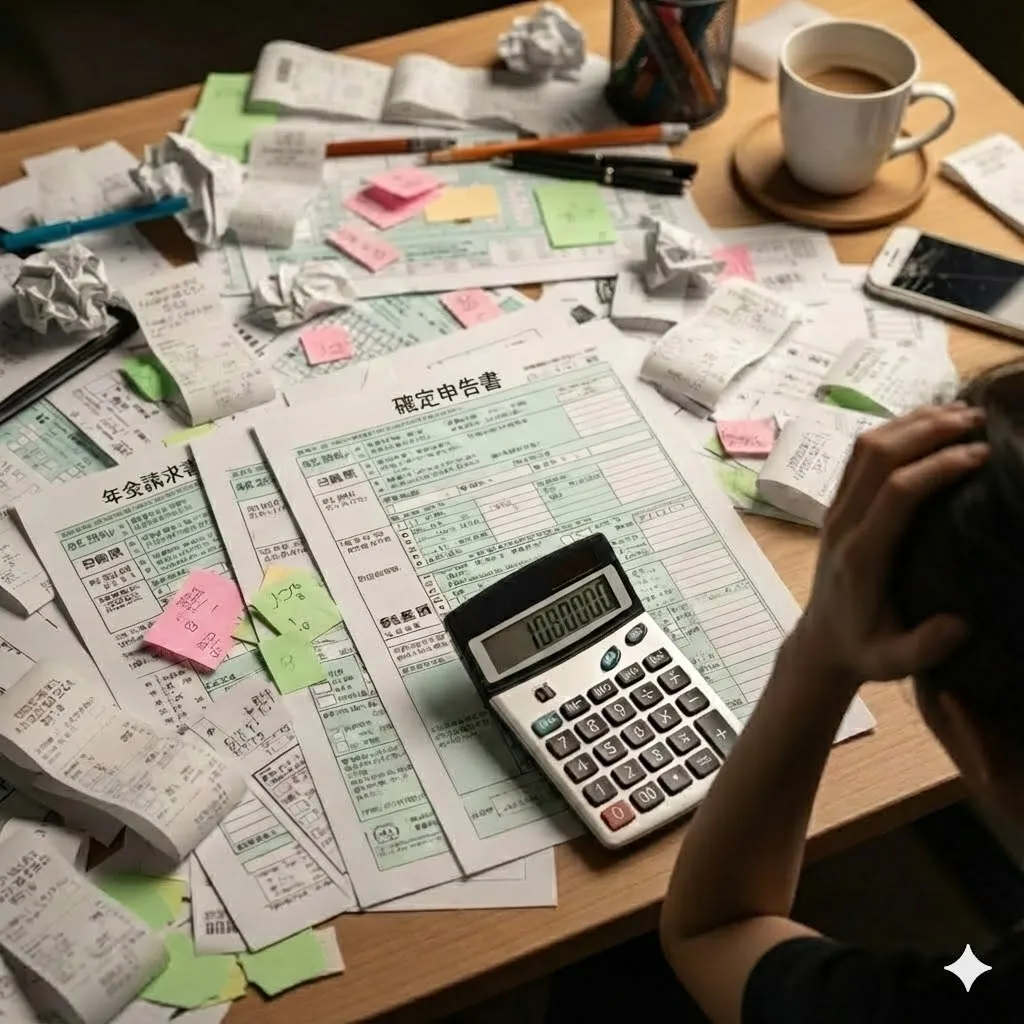
A desk covered in Japanese receipts and tax forms, representing the confusion of Kakutei Shinkoku

This is a particularly common case among foreigners working as engineers, designers, and marketers. "I just earned a little from UberEats." "I got paid by an overseas client via Upwork."

All of these are taxable income.

Under Japanese law, if your income other than your salary (side jobs, etc.) exceeds ¥200,000 per year, you are required to file a Final Tax Return (Kakutei Shinkoku). Neglecting this is considered "tax evasion" and creates a risk of your next visa renewal being denied.

Solution: Prepare for "Kakutei Shinkoku" Immediately

There is no need to give up thinking, "Hiring a tax accountant costs over ¥100,000, and the Japanese forms are too difficult..." Nowadays, there are apps that allow you to create tax returns just by answering questions on your smartphone.

Compared to the risk of losing your visa, a cost of around ¥1,000 per month is a very cheap investment.

File a 'Perfect' Tax Return for Visa Renewal

A mistake in tax calculation can be fatal. Just take photos of your receipts with your smartphone, and the AI will automatically create your ledger. With translation tools, it's easy even for foreigners.

Try freee for free (0 yen for 1 month)

※ For specific steps on filing tax returns and deductions, please refer to the Complete Guide to Tax Returns for Foreigners.


Risk Level 2: Non-Enrollment in Social Insurance by "Black Companies"

"We are a small company, so we don't have Social Insurance (Shakai Hoken). You have to join the National Health Insurance yourself."

If your company tells you this, you are in a dangerous situation. If you are a regular employee (or on a contract close to full-time), the company has a legal obligation to enroll you in Social Insurance. Continuing to stay at a company that refuses this could be viewed as you being complicit in an "illegal state."

Furthermore, if you pay the National Pension and National Health Insurance yourself, the monthly burden is high, and the risk of forgetting to pay increases drastically.

Solution: Change Jobs to a Compliant Company (Escape)

A foreign employee smiling confidently in a modern Japanese office, representing a safe career path

You do not need to be loyal to a company that does not protect your visa. Before the stricter screening begins in 2026, moving to a "White Company" with complete Social Insurance is the strongest visa defense strategy.

Search Only for Jobs with 'Complete Social Insurance'

Search Only for Jobs with 'Complete Social Insurance'

Many listings from global and foreign-affiliated companies that offer visa support and comply with laws. Escape from black companies and secure the safety of your residence status.

View jobs on Daijob (Free)

For advice on how to proceed with job hunting safely, please refer to the Guide to Successful Job Changes in Japan.


Action List to Survive 2026

While the Takaichi administration's policy is strict, foreigners who follow the rules have nothing to fear. Please execute the following checklist immediately.

  1. Check "Nenkin Net" Check if there are any past unpaid periods, and if so, consult about making back payments.
  2. Pay off Residence Tax (Juminzei) completely Residence tax is the most common tax to fall behind on. Go to your city hall and confirm there are no outstanding payments.
  3. Separate your bank accounts for side jobs To make tax filing smoother, prepare a bank account specifically for business. (Reference: Bank Account Opening Guide for Foreigners)

"I want to continue living in Japan." If you have that will, take action now. Whether it's preparing for tax returns or considering a job change, the sooner you act, the more options you will have.

Frequently Asked Questions (FAQ)

Q1. Is it true that I won't be able to renew my visa if I have unpaid pension starting in 2026?

A. Yes, it is highly likely. Due to the policy shift in 2025, Immigration is strictly checking the payment status of taxes and social insurance premiums during residence status renewal examinations. The trend is that unpaid statuses are becoming a negative factor not only for Permanent Residency but also for the renewal of work visas.

Q2. Is a tax return necessary even if my side income is small?

A. If your side income is ¥200,000 or less per year, a Final Tax Return for Income Tax is not required, but you must file for Residence Tax. To protect your credibility during visa renewal, we recommend declaring even small amounts with transparency.

Save this guide for later?

You might need this information again. Bookmark this page to access it anytime.

Press Ctrl + D to Bookmark

Get the Latest Visa Updates

Receive important updates about visa requirements and new residence statuses directly to your inbox.

Share this article

Reading this in English?

Help improve English guides like this

If this guide helped but a phrase felt unnatural, your native check can make the next English article clearer for foreign residents in Japan.

Improve English guides

🔗 Related Articles (Recommended)

  • Residence Tax in Japan: Why Your Paycheck Shrinks in Year 2 & The "Leaving Japan" Trap- Reccomended
  • [Ultimate Guide] Can't Pay Your Japanese Pension? How to Apply for Exemption and Protect Your Visa- Reccomended
  • Japan Visa Renewal and Permanent Residence Fees May Increase: What Foreign Residents Should Check Now- Reccomended

Disclaimer

※ The information in this article is accurate as of the time of writing. Laws and regulations may change, so please always check official sources for the latest information. We assume no liability for any damages resulting from the content of this article.

Related Articles

Cost of Living in Japan for Foreign Residents (June 2026)

How to Sort and Throw Away Garbage in Japan (2026): A Foreign Resident's Practical Guide

International School vs Japanese School for Foreign Children in Japan

Disaster & Emergency Guide for Foreigners in Japan (2026): What To Do When It Happens

Frequently Asked Questions

Q: Do foreigners in Japan have to pay income tax?

A: Yes. Foreigners residing in Japan for more than 1 year are considered "residents" for tax purposes and must pay Japanese income tax on their worldwide income — the same as Japanese nationals. Short-term residents (under 1 year) pay tax only on Japan-sourced income.

Q: What taxes does a foreigner working in Japan need to pay?

A: Working foreigners pay: (1) Income tax (withheld from salary), (2) Resident tax (~10% of prior year income, billed from June), (3) Pension premium, and (4) Health insurance premium. Employer-sponsored shakai hoken covers pension and health insurance automatically.

Q: Do foreigners on a working visa in Japan need to file a tax return?

A: If your employer does year-end tax adjustment (年末調整), you usually don't need to file. But you must file a 確定申告 if: you have multiple income sources, you're self-employed, you're claiming deductions, or you earned over ¥20 million in the year.

Q: Can foreigners in Japan claim the lump-sum pension withdrawal when leaving?

A: Yes. If you contributed to Japanese pension and leave Japan permanently, you can claim the Lump-Sum Withdrawal Payment within 2 years of leaving. The amount depends on how many months you contributed. You apply after leaving Japan.

Q: What is Furusato Nozei and can foreigners use it?

A: Furusato Nozei lets residents donate to municipalities and receive local product gifts, effectively prepaying future residence tax. Foreigners with resident tax liability can fully participate. You need a My Number Card for the convenient One-Stop Exception system.

Categories

  • Work & Study
  • Housing & Daily Life
  • Money & Cards
  • Essentials

Best Estate

Foreigner-friendly apartment hunting site

Best Estate
Find Apartments ↗👉

GTN Home Internet

Fiber internet specialized for foreigners

GTN Home Internet
View Details ↗👉

Furniture Subscription

All Brand New! Furniture & Appliance Sub

Furniture Subscription
View Laclear ↗👉

Share Door Apt

Tokyo from 30k yen. Furnished & Cleaning inc.

Share Door Apt
Find Apartments ↗👉

Oakhouse

Best value & community! Japan's largest share house

Oakhouse
View Oakhouse ↗👉

Leopalace21

Furnished apartments? Choose Leopalace21

Leopalace21
Find Rooms ↗👉

TokuToku BB Hikari

Great value! Free fiber construction fee

TokuToku BB Hikari
View Details ↗👉