
Housing & Daily Life / Housing & Daily Life
This article may contain affiliate linksLearn moreMoving in Japan 2026: Save 50% with "Email Only" Quote Hack
Published on January 29, 2026
Updated on June 11, 2026
Author:JapanLifeStart Editorial Team

Housing & Daily Life
Updated against official, partner, and reviewed site evidence where available.
Last updated: June 11, 2026
Official or partner facts are separated from practical notes.
Prices, screening, documents, and rules can change.
Some next-step links may be monetized.
Needs review: Approval, visa/tax/legal, availability, and campaign terms are not guaranteed. Confirm on the official or partner page.
Great for LINE / WhatsApp sharing
Moving in Japan is stressful. Moving in the spring of 2026 might be impossible.
If you are planning to move between February and April 2026, you need to act immediately. Due to the new 2024 logistics laws (limiting driver overtime) and a severe labor shortage, Japan is facing a "Moving Refugee" (Hikkoshi Nanmin) crisis. Trucks are scarce, and prices are predicted to be 150% to 200% higher than usual.
Many foreigners make a fatal mistake: they only contact "English-speaking moving companies." While convenient, these services often charge a "Foreigner Premium" (Gaijin Tax)—sometimes double the local market rate.
This guide will show you how to access the local Japanese market to secure the same low rates as Japanese citizens, including a specific "hack" to use Japanese quote sites without getting harassed by sales calls.
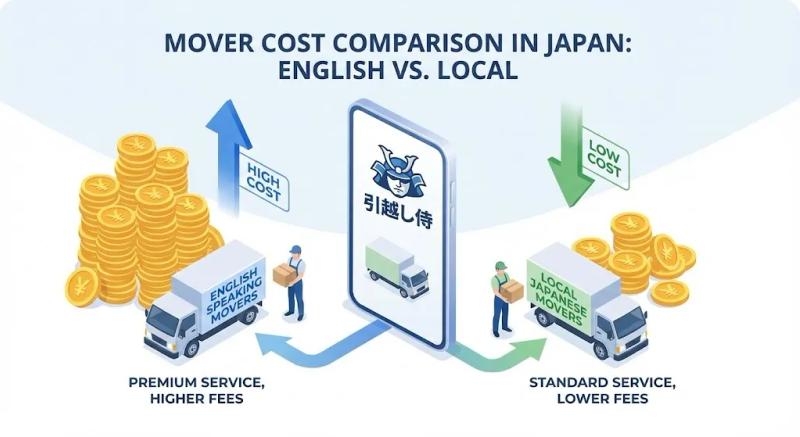
Compare 340+ companies instantly. The only way to find 'Return Trip' deals and save up to 50%.
Why is there such a price difference? "English-friendly" movers cater to a niche market. They have bilingual staff and smaller fleets, meaning their operational costs are higher.
On the other hand, Japanese "Bulk Quote Services" (Ikkatsu Mitsumori) connect you with hundreds of local companies (like Sakai, Art, or local SMEs) that are desperate to fill their trucks.
The local movers often use "Return Trips" (Kaeribin)—trucks that delivered cargo and are returning empty. They would rather take your boxes for a cheap price than drive back with nothing. You can only find these deals on Bulk Quote sites.
Here is the strategic breakdown of which service you should use based on your priority: Price, Ease, or Niche.
| Service | Best For | Price Level | English Support |
|---|---|---|---|
| 1. Hikkoshi Zamurai | Absolute Lowest Price | ★★★★★ (Cheapest) | ✕ (Use Hack below) |
| 2. Rakutto NAVI | Stress-Free | ★★★★☆ | △ (Concierge) |
| 3. Hakobu / Akabou | Tokyo Singles | ★★★★☆ | ✕ (Japanese Only) |
The "King" of Low Prices. This is Japan's largest comparison site with over 340 companies. If you want to save ¥50,000 or more, this is your only option. It creates a "bidding war" for your move.
Don't worry about the Japanese form. I will show you exactly how to fill it out and stop the phone calls in the 'Guide' section below.
The "Concierge" Option. Unlike Zamurai, where multiple companies might contact you, here you only talk to one support agent. They act as your broker to find quotes.
Talk to just one person and let them find the movers for you. Ideal if you are busy.
For Light Movers. If you live in Tokyo/Kanagawa/Saitama/Chiba and have very few items (no big bed), this service offers fixed low rates. It works like a taxi for your boxes.
Best for single movers in the Greater Tokyo area. Cheap and simple.
Many foreigners avoid Hikkoshi Zamurai because they are afraid of receiving 10+ phone calls from eager sales reps. Here is the solution. You can legally demand "Email Contact Only" by using the remarks field.
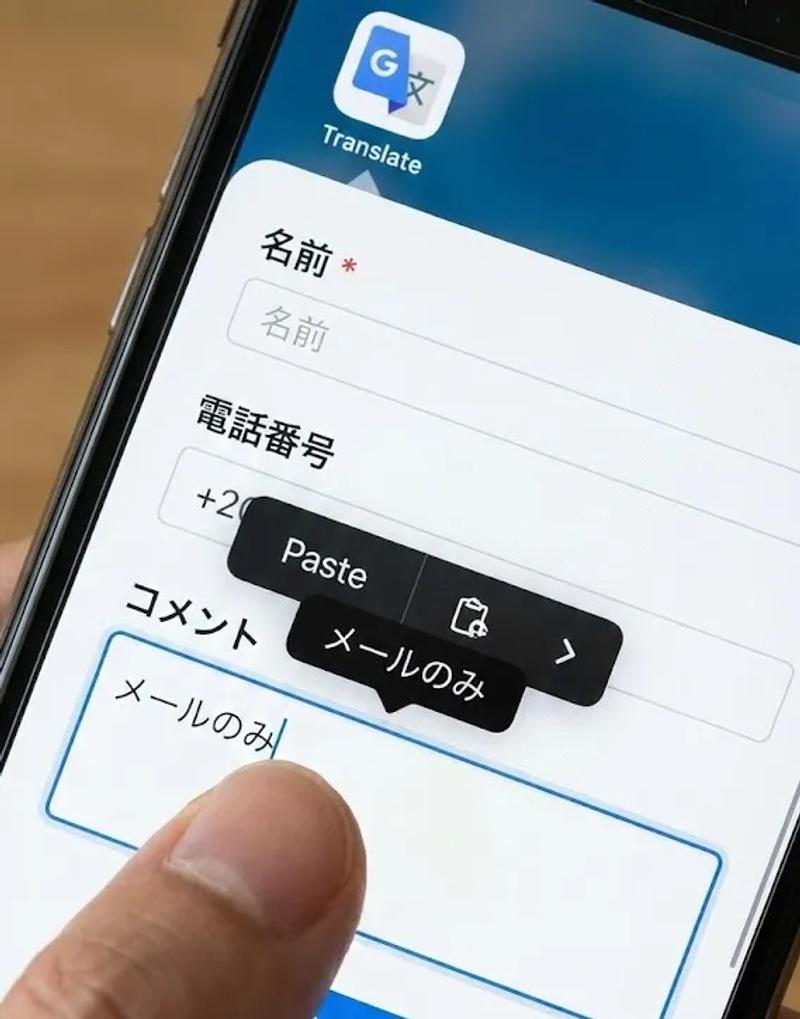
Go to Hikkoshi Zamurai. Use your browser's "Translate to English" function (Right-click -> Translate).
In the final step, there is a box for "Remarks / Other Requests" (その他、ご要望など). Copy and paste the following Japanese text exactly:
【重要】日本語が苦手なため、電話での対応はできません。見積もりはメールでのみお願いします。電話があった業者とは契約しません。 (Translation: [Important] I am not good at Japanese, so I cannot handle phone calls. Please provide quotes via email only. I will not sign a contract with any company that calls me.)
Why this works: Sales reps use auto-dialers. By putting this warning, you filter out the aggressive companies. You will receive quotes via email, which you can translate with DeepL or Google Translate at your own pace.
You must understand the severity of the "2024 Problem" (Logistics Law Reform). Truck drivers can no longer work unlimited overtime. This means the total capacity of moving trucks in Japan has dropped by roughly 14-20%.
Forecast for Spring 2026:
Strategy: Do not wait for your visa or new apartment contract to be 100% finalized. Get a quote NOW to lock in a price or at least secure a slot. You can usually adjust the date slightly later, but you cannot create a truck out of thin air in March.
I used the 'Email Only' hack on Hikkoshi Zamurai. I got 4 quotes via email. The highest was ¥120,000, but the lowest was ¥55,000 (a return trip truck). I showed the cheap email to the better-rated company and they matched the price!
1-2 Months Before:
2 Weeks Before:
14 Days After Moving:
Moving in Japan is expensive, but it doesn't have to bankrupt you. The difference between "English Support Premium" and "Local Market Price" can be ¥50,000 to ¥100,000. That is enough to buy a new refrigerator or pay for your first month's utilities.
Use the tools locals use. Copy the magic Japanese phrase. Get the fair price you deserve.
Don't wait until March. Secure your truck now before prices double.
Once you've booked your movers
After locking in moving costs, reviewing utilities, furniture, and appliances together compounds the savings.
You might need this information again. Bookmark this page to access it anytime.
A practical 14-day checklist for city hall, utilities, SIM, internet, and moving tasks.
Reading this in English?
Help improve English guides like this
If this guide helped but a phrase felt unnatural, your native check can make the next English article clearer for foreign residents in Japan.
A: Use bulk quote comparison sites like Hikkoshi Zamurai (引越し侍) or Suumo Hikkoshi to get quotes from multiple companies simultaneously. Request "email only" communication to avoid sales calls. Getting 3+ quotes is the most reliable way to find the lowest price.
A: Moving companies know that customers who respond to phone calls are easier to upsell. By specifying email-only contact, you avoid pushy sales calls and end up receiving base-rate quotes that are 20–40% lower than quotes given over the phone.
A: Avoid March–April (peak season due to school/company year-end transitions) and weekends. Moving in January, February, June–August, or October–November on a weekday can reduce costs by 30–50% compared to peak season.
A: Yes. Major chains like Kuroneko Yamato and Sagawa have staff who can manage basic moves with minimal language. You can indicate furniture placement with diagrams or photos. Some agencies have English-speaking staff; ask at the quote stage.
A: Some moving companies quote higher prices to foreigners assuming they won't know the typical market rate or won't negotiate. Using comparison sites with standardized request forms prevents this — quotes are calculated based on the job criteria, not the customer's appearance.

CEO / Native Japanese Expert
Updated on: June 11, 2026
※ The information in this article is accurate as of the time of writing. Laws and regulations may change, so please always check official sources for the latest information. We assume no liability for any damages resulting from the content of this article.


