JapanLifeStartJapanLifeStart
EssentialsHousing & Daily LifeMoney & CardsWork & Study
JapanLifeStart logoJapanLifeStart

Multilingual support platform for living, studying and working in Japan.

  • SIM Card Comparison
  • Credit Cards
  • Bank Accounts
  • Apartment Hunting
  • Essentials
  • Housing & Daily Life
  • Money & Cards
  • Work & Study
  • About JapanLifeStart
  • Contact
  • Sitemap
  • Privacy Policy
  • Terms of Service
  • Ad Disclosure
  • Help Us Translate
  • Operator: Prodouga Corporation
© 2026 JapanLifeStart / 株式会社プロドウガ All rights reserved.
  1. Home
  2. /
  3. Housing & Daily Life
  4. /
  5. 【Ultimate Guide】Moving in Japan Procedures: Checklist from Move-out to the First 14 Days
Housing & Daily Life / Housing & Daily Life
This article may contain affiliate linksLearn more

【Ultimate Guide】Moving in Japan Procedures: Checklist from Move-out to the First 14 Days

Published on January 10, 2026
Updated on June 11, 2026
Author:JapanLifeStart Editorial Team
Image of a moving checklist in Japan, a Residence Card, and cardboard boxes in a room
Portrait of Yushi Yamamoto, CEO of ibis
Yushi Yamamoto

CEO / Native Japanese Expert

Updated on: June 11, 2026

Housing & Daily Life

How this guide is checked

Updated against official, partner, and reviewed site evidence where available.

Last updated: June 11, 2026

Source separation

Official or partner facts are separated from practical notes.

Fast-changing details

Prices, screening, documents, and rules can change.

Affiliate link handling

Some next-step links may be monetized.

Needs review: Approval, visa/tax/legal, availability, and campaign terms are not guaranteed. Confirm on the official or partner page.

Recommended next step

After moving in, check electricity, internet, and furniture setup

Checklist readers have strong setup intent, so the immediate move-in contracts are grouped here.

Before applying, check the destination page for current eligibility, from-abroad or domestic application options, required documents, and support languages.

This page contains affiliate links. We may earn a commission from purchases or sign-ups, at no extra cost to you. Learn more

Octopus EnergyAfter comparing bills, check the switching campaign.Check switch offerGTN Home Internet after move-inA foreigner-friendly route for home internet after choosing a room.Check internetFurniture and appliance rentalReduce the upfront burden when moving into an unfurnished apartment.Check rental
💌

Send to Friends (Summary)

  • •[Must-Read for Foreigners] Watch out for the "14-Day Rule" when moving in Japan! From move-out notices to oversized trash, canceling utilities, and updating your Residence Card at City Hall. This is the complete chronological checklist to prevent visa issues and start your new life smoothly.

Great for LINE / WhatsApp sharing

【Ultimate Guide】Moving in Japan Procedures: Checklist from Move-out to the First 14 Days

!(/images/moving-in-japan-checklist-header.webp)

"I've decided to move! But Japanese bureaucracy is so complicated, I don't know where to start..."

Are you feeling this anxiety? For foreign residents especially, moving in Japan is not just about transporting boxes. If you miss the strict administrative procedures—specifically the "within 14 days of moving in" rule (Move-in Notification and Residence Card address update)—you risk a fine of up to ¥200,000 and could potentially negatively affect your future visa renewals.

Furthermore, there are pitfalls everywhere, such as the mandatory presence required for gas activation or waiting over a month for internet installation. Stories of failures like "My gas wasn't turned on, so I had to take freezing cold showers in the middle of winter" are all too common.

In this article, we break down the Japanese moving process into three phases: "Pre-Move," "Just Before," and "Post-Move." We provide a complete checklist covering "When," "Where," and "What" you need to do. Read this to avoid unnecessary expenses (like double rent or cancellation fees) and start your new life smoothly.

【Phase 1】1-2 Months Before Moving: Move-out Notice and Booking Movers

The most critical part of a moving project is the "initial action." Mistakes here can lead to losses amounting to tens of thousands of yen. You don't need to start packing yet, but start the following two tasks immediately.

Confirm Move-out Notice and Cancellation Fees

First, check your current rental contract. The notice period for cancellation is typically set to "1 month before" or "2 months before."

  • Notice Deadline: If your deadline is "1 month before" and you want to move out on March 31st, you must notify the landlord by February 28th. If you miss this, you will be charged rent for April (or pro-rated rent).
  • Short-term Cancellation Penalty: Check if there is a special clause requiring a penalty fee (often equivalent to one month's rent) if you move out within less than one year or two years of moving in.

★Read also: 【2026 Edition】The Truth About "Initial Costs" in Japanese Rentals: Understanding Key Money, Deposits, and Guarantors

Selecting a Moving Company (How to Avoid the "Phone Attack")

Next is arranging a moving company, but caution is needed here. If you register with a standard Japanese "bulk estimate website," your phone will start ringing immediately with a "barrage of sales calls" from multiple companies. You definitely want to avoid getting calls late at night or early in the morning.

Therefore, we recommend a concierge-type estimate service.

No Spam Calls! Compare Quotes Smartly

With 'Hikkoshi Rakutto NAVI,' speak to one concierge just once to get quotes from multiple companies. Avoid the storm of sales calls and get great support for foreigners.

Get a Free Moving Quote
👨

I used a standard comparison site before and almost had a breakdown from getting over 10 calls an hour. 'Rakutto NAVI' has just one point of contact, so I could request English-speaking movers and compare peacefully.

Strategy for Disposing of Oversized Trash (Bulky Waste)

When disposing of furniture or appliances, the municipal "Sodai Gomi" (Oversized Trash) collection is the cheapest option (about ¥300 to ¥2,000 per item), but reservations often require a wait of "2 weeks to 1 month."

  • Watch the Deadline: Many municipalities have rules like "deadline is the 23rd of the month." You won't make it if you try to book just before your move-out date.
  • If You Can't Make It: You will have to use a private junk removal service, but be careful as there are some unscrupulous operators.

If you miss the municipal collection, the following service is effective as a "last resort" with clear pricing and same-day service availability.

Clear Out Junk Instantly

Missed the city collection deadline? Try 'ECO Clean.' Their truck load plan allows you to have everything collected at once without sorting.

Get a Quote for Junk Removal

★Read also: Is Renting Furniture & Appliances Better Than Buying? Full Comparison of 2-Year Costs and Disposal Fees 【2026】

【Phase 2】2 Weeks Before to the Day Before: Utilities and Administrative Prep

Missing procedures for essential utilities leads directly to a new life hell where you "can't take a bath" or "have no internet."

!(/images/moving-in-japan-checklist-utilities.webp)

Canceling and Starting Utilities (Electricity, Gas, Water)

Contacting each company can often be done via the Web, but timing is crucial.

  • Electricity: Smart meters are now common, so your presence is generally not required. Moving is also the best time to review your power company. Simply switching to a "New Power Company" (Shin-Denryoku) can often save you ¥5,000 to ¥10,000 per year.

Review Rates & Get Amazon Gift Cards

Compare and switch electricity providers with 'Enechange' to receive high-value Amazon gift cards or cashback. The process is done entirely online.

Simulate Electricity Costs
  • Gas (Most Important): By law, your presence is required to open the gas valve (start service). Reservations flood in during the busy season (March-April). If you don't book at least 2 weeks in advance, you may not be able to use hot water from day one and will be forced to go to a public bath (Sento).
  • Water: Basically, apply via the Web or phone to the Waterworks Bureau in charge of your area.

Dealing with the Internet "Construction Wait"

The reality of optical fiber lines in Japan (especially NURO Hikari or au Hikari) is that it takes 1 to 2 months from application to installation. During this time, you risk becoming a "net refugee" without Wi-Fi at home.

If you cannot wait for construction or are staying for a short period, a home router that requires no construction is the best solution.

No Construction! Plug & Play Instant Wi-Fi

Don't worry about waiting for fiber optic construction. With 'Docomo home 5G,' you get unlimited Wi-Fi the day the device arrives. Now offering ¥15,000 cashback.

See Details for No-Construction Wi-Fi

★Read also: 【2026 Edition】Japan Home Internet Comparison: Fiber Optics vs Home Router vs Pocket Wi-Fi

Submitting the Move-out Notification (Tenshutsu-todoke)

Previously, you had to go to the city hall, but now if you have a "My Number Card," you can submit the Move-out Notification online via "Myna Portal."

  • If going to the counter: Go to the city hall of your old address with your ID (Residence Card, etc.). Receive the "Certificate of Move-out" (Tenshutsu Shomeisho) and absolutely do not lose it (you need it to move in).
User Review★★★★★5/5
Senior Writer's Note
Moving out via Myna Portal is convenient, but you need your digital certificate password (6+ alphanumeric characters). Be careful—if you enter it incorrectly 3 times, it will be locked.

【Phase 3】Move-in Day to Within 14 Days: City Hall & Address Changes

From here, this is the phase where you must comply with the "14-Day Rule" set by law to protect your residence status.

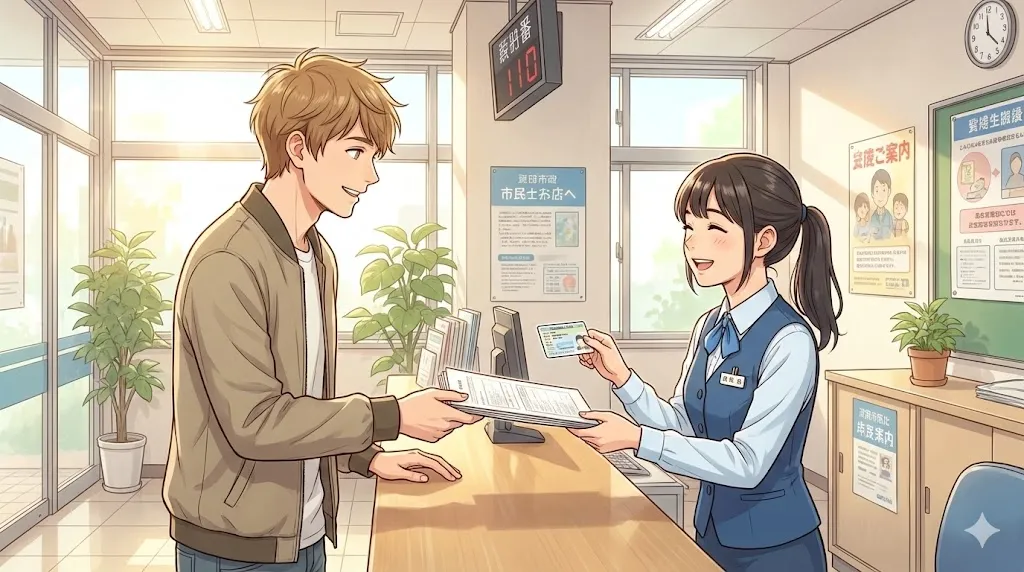
Submitting move-in notification at a Japanese city hall and updating residence card

Move-in Notification (Tennyu-todoke) and Residence Card Endorsement

Once you move into your new home, you must submit a "Move-in Notification" at the municipal office of your new address within 14 days.

  • The 14-Day Rule: If the notification is delayed without a valid reason, you may be subject to a fine of up to ¥50,000. It also risks being a negative factor during your visa renewal.
  • Residence Card: Be sure to bring your Residence Card when submitting the Move-in Notification. The new address will be written on the back of the card at the counter, which counts as completing the notification of address change to the Immigration Bureau (you do not need to go to Immigration separately).

Mail Forwarding and Other Address Changes

  • Mail Forwarding (e-Tenkyo): A service that forwards mail sent to your old address to your new one for free for one year. You can apply at a post office counter or via the Web (e-Tenkyo). However, for foreign names, web forms often return errors due to middle name formatting, so applying at the counter is more reliable.
  • Address Change List:
    • Banks & Credit Cards
    • Mobile Phone
    • Employer / School

Conclusion

Moving in Japan involves a mountain of paperwork, but if you do it in the right order, there is nothing to fear. In particular, "Address Change on Residence Card (within 14 days)" and "Gas Activation Appointment (2 weeks prior)" are top priorities involving your daily life and visa.

First, start with "Arranging a Moving Company," which takes the most time and offers the highest potential for savings. Use the link below for a smart estimate without the phone attacks.

Free Quote with Hikkoshi Rakutto NAVI

A concierge negotiates on your behalf. Zero phone spam, find the cheapest moving company.

Get a Free Quote Now

Save this guide for later?

You might need this information again. Bookmark this page to access it anytime.

Press Ctrl + D to Bookmark

Get the free Moving in Japan checklist

A practical 14-day checklist for city hall, utilities, SIM, internet, and moving tasks.

Share this article

Reading this in English?

Help improve English guides like this

If this guide helped but a phrase felt unnatural, your native check can make the next English article clearer for foreign residents in Japan.

Improve English guides

Disclaimer

※ The information in this article is accurate as of the time of writing. Laws and regulations may change, so please always check official sources for the latest information. We assume no liability for any damages resulting from the content of this article.

Related Articles

Cost of Living in Japan for Foreign Residents (June 2026)

How to Sort and Throw Away Garbage in Japan (2026): A Foreign Resident's Practical Guide

International School vs Japanese School for Foreign Children in Japan

Disaster & Emergency Guide for Foreigners in Japan (2026): What To Do When It Happens

Frequently Asked Questions

Q: What are the most important things to do in the first week after moving to Japan?

A: First week priorities: (1) Register at city hall (転入届 within 14 days), (2) Get your Residence Card updated with new address, (3) Open a bank account (Japan Post Bank / Shinsei are easiest for new arrivals), (4) Set up a phone/SIM plan, (5) Notify your employer of the new address. Everything else can follow.

Q: Do I need to register my address at the ward office when I move in Japan?

A: Yes. All foreigners with a registered address must report a change of address to the ward/city office within 14 days of moving. Bring your Residence Card. The address is updated on the card at the office. Failure to report is technically a violation of the Immigration Control Act.

Q: How do I set up electricity, gas, and water in a new apartment in Japan?

A: Electricity and gas require a phone call or online registration with the utility company (often listed on the contract paperwork left by the landlord). Water is usually handled by the building management. In many apartments the landlord activates basic services — confirm before or at key handover.

Q: What bank account is easiest for a foreigner to open after moving to Japan?

A: Japan Post Bank (ゆうちょ銀行) and Sony Bank are the easiest for new arrivals. Japan Post Bank accepts Residence Card with an address registered for less than 6 months. Shinsei Bank and PRESTIA are popular with English speakers. Most major banks require 6 months of address history.

Q: How do I set up internet when moving into a new apartment in Japan?

A: First check if the apartment has a pre-wired Flets (NTT) port — many do. Apply for an ISP plan before moving in if possible (installation takes 2–6 weeks). As a bridge, use a pocket WiFi or the mobile hotspot on your phone. GMO Hikari and NURO offer relatively foreigner-friendly application processes.

Categories

  • Work & Study
  • Housing & Daily Life
  • Money & Cards
  • Essentials

Best Estate

Foreigner-friendly apartment hunting site

Best Estate
Find Apartments ↗👉

GTN Home Internet

Fiber internet specialized for foreigners

GTN Home Internet
View Details ↗👉

Furniture Subscription

All Brand New! Furniture & Appliance Sub

Furniture Subscription
View Laclear ↗👉

Share Door Apt

Tokyo from 30k yen. Furnished & Cleaning inc.

Share Door Apt
Find Apartments ↗👉

Oakhouse

Best value & community! Japan's largest share house

Oakhouse
View Oakhouse ↗👉

Leopalace21

Furnished apartments? Choose Leopalace21

Leopalace21
Find Rooms ↗👉

TokuToku BB Hikari

Great value! Free fiber construction fee

TokuToku BB Hikari
View Details ↗👉