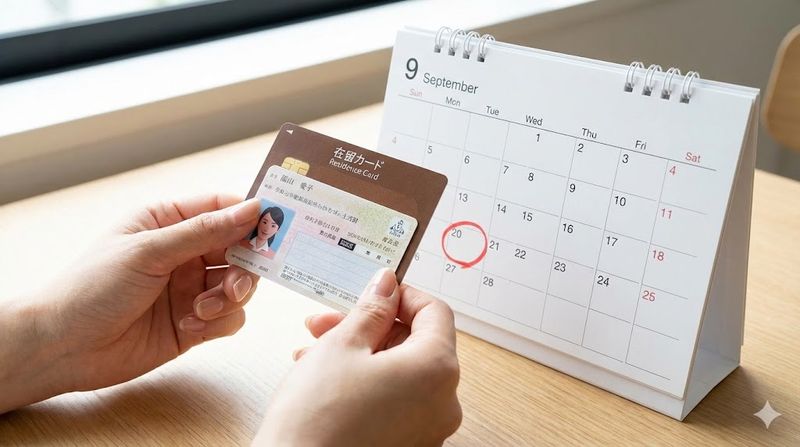
[2026 Ultimate Guide] Moving-in Notification & My Number Card for Foreigners in Japan
Published on February 21, 2026
Updated on June 11, 2026
Author:JapanLifeStart Editorial Team
Housing & Daily Life
How this guide is checked
Updated against official, partner, and reviewed site evidence where available.
Last updated: June 11, 2026
Source separation
Official or partner facts are separated from practical notes.
Fast-changing details
Prices, screening, documents, and rules can change.
Affiliate link handling
Some next-step links may be monetized.
Needs review: Approval, visa/tax/legal, availability, and campaign terms are not guaranteed. Confirm on the official or partner page.
💌
Send to Friends (Summary)
•If you don't submit your moving-in notification within 14 days of moving, you may face penalties. This 2026 ultimate guide explains the step-by-step procedures for foreigners to register their address and manage their My Number Card without any trouble.
Great for LINE / WhatsApp sharing
[2026 Ultimate Guide] Moving-in Notification & My Number Card for Foreigners in Japan
Have you arrived in Japan or moved to a new apartment, but keep putting off the city hall procedures because they seem too complicated?
The truth is, if you don't submit your Moving-in Notification (Tennyu Todoke) within 14 days of moving into your new address, you face a fine of up to 200,000 yen, or in the worst-case scenario, the cancellation of your visa.
Based on the latest official information for 2026, this article provides a step-by-step guide for foreigners to register their address without hesitation and successfully receive their My Number Card.
We cover everything from "What to do if you missed the deadline" and "The expired card trap when renewing your Residence Card" to "Useful Japanese phrases for the city hall counter." By following this guide, you can seamlessly establish your life in Japan without any legal trouble.
Introduction: Why is the "14-Day" Rule So Crucial?
Under Japanese law (the Basic Resident Registration Act and Immigration Control Act), you are legally required to submit a Moving-in Notification to your local municipality within 14 days of deciding on a new address.
The 14-Day Rule and Legal Penalties
If you miss this deadline without a valid reason, you may be subject to a fine (non-penal penalty) of up to 50,000 yen (or up to 200,000 yen in severe cases).
What is even more frightening is leaving your address unregistered for more than 90 days . In this case, you run the risk of having your visa (status of residence) revoked by the Minister of Justice, making you subject to deportation.
👨
I missed the 14-day deadline... Will I have to leave Japan? What should I do!
What to Do If You Missed the Deadline
There is no need to panic. If you accidentally pass the 14-day mark, you can recover by submitting a "Statement of Reasons for Delay" (Chien Riyusho) at the city hall counter.
In this document, honestly write down the reason for the delay, such as "I was waiting for necessary documents to arrive from my home country" or "I was hospitalized due to illness." The most important thing is to visit the counter as soon as possible and handle the situation sincerely.
[By Situation] The Correct Steps for Resident Registration
The required documents for the Moving-in Notification depend on your current situation.
For New Arrivals (Moving to Japan from Overseas)
If this is your first time living in Japan, bring the following items to the city hall of your new address:
Passport (with the entry stamp)
Residence Card (if received at the airport)
If you used the automated gate at the airport and do not have an entry stamp in your passport, you must bring something that proves your date of entry into Japan, such as your flight ticket stub.
When Moving Within Japan
If you are moving to a different municipality within Japan, you must first complete a procedure at the city hall of your "old address."
Old City Hall: Submit a Moving-out Notification (Tenshutsu Todoke) and receive a "Moving-out Certificate."
New City Hall: Submit a Moving-in Notification within 14 days, bringing your "Moving-out Certificate" and "Residence Card."
If you already have a My Number Card, the "One-Stop Moving Service" via the MynaPortal app is highly convenient. You can submit your moving-out notification online from your smartphone, saving you a trip to your old city hall.
When Moving with Family
If a family of foreign nationals registers together, you must prove who the head of the household is and the relationship of the other members (e.g., wife, child).
You must prepare the original Marriage Certificate or Birth Certificate issued by your home country's government, along with a Japanese translation (signed by the translator).
"My Number Card" Creation Manual for Foreigners
Once your Moving-in Notification is successfully completed, you will be assigned a "My Number" (Individual Number).
Why Do You Need a My Number Card?
In December 2024, the issuance of traditional health insurance cards was abolished. Currently, the "Myna Health Insurance Card" (using your My Number Card as your health insurance card) is the standard. Creating a My Number Card is now essentially mandatory just to visit a clinic or hospital.
4 Ways to Apply
About 2 to 3 weeks after submitting your Moving-in Notification, an "Individual Number Notice" and an application form will be mailed to your home. Here are the 4 ways to apply:
Smartphone Application (Recommended): Just scan the QR code on the application form, take a selfie with your smartphone, and send it. It is the fastest and easiest method.
Mail Application: Download the English application form, attach your photo, and mail it.
PC Application: Upload a photo taken with a digital camera and apply online.
ID Photo Booth: You can apply directly from compatible ID photo booths found around town.
Receiving the Card and Setting PINs
About 1 month after applying, an "Issuance Notice" (postcard) will arrive from the city hall. Bring this and your Residence Card to the city hall to receive your physical card.
When receiving it, you will need to set up PIN codes at the counter: a 4-digit number and an alphanumeric password of 6 to 16 characters . You will use these numbers frequently, such as when printing documents at convenience stores, so be sure to write them down and never forget them.
Once your My Number Card and Certificate of Residence (Juminhyo) are ready, the next step is to secure a "Phone Number" and a "Credit Card," which are essential for life in Japan. A Japanese phone number is also strictly required when opening a Japanese bank account.
We highly recommend the following foreigner-friendly services with high approval rates and English support!
GTN Mobile
Sign up right after arriving in Japan! A mobile SIM exclusively for foreigners with full multilingual support.
I needed a phone number right after arriving to open a bank account. GTN Mobile let me sign up immediately with just my Residence Card and passport. It was a lifesaver!
[Warning] Common My Number Traps Foreigners Fall Into
There are three critical points every foreigner must know when holding a My Number Card.
The "Expired Card" Trap When Renewing Your Visa
As a general rule, the expiration date of a foreigner's My Number Card is the same as their Residence Card's expiration date .
Even if you renew your visa (period of stay) at the Immigration Bureau, your My Number Card's expiration date is NOT updated automatically! When you receive your new Residence Card, you must go to the city hall to complete the validity extension procedure before your My Number Card expires.
If your card is about to expire while you are still waiting for your visa renewal results, you must go to the city hall beforehand to apply for a "Special Period Extension (up to 2 months)." If you miss the deadline by even one day, the card will expire, and you will face a 1,000 yen reissue fee and a one-month wait.
Forgetting the "Continuous Use" Procedure When Moving
When you move to another municipality, simply submitting a Moving-in Notification is not the end of the process.
At the exact same time you submit your notification, you must complete the continuous use procedure for your My Number Card at the counter to rewrite the address data on the IC chip. If you fail to do this within 14 days of moving in (or within 30 days of your planned moving-out date), your card will instantly become invalid.
Registering a Katakana Name (Alias)
When opening a Japanese bank account, you are often asked to input your name in "Katakana." However, since the My Number Card uses alphabetical spelling by default, many foreigners face troubles where banks refuse them because "identity cannot be verified."
The magic trick to prevent this is registering a Katakana alias in the "Remarks Column" (Biko-ran) of your Certificate of Residence. When submitting your Moving-in Notification, say this to the staff:
「銀行口座を作るために、住民票の備考欄にカタカナの通称名を登録したいです。」(I would like to register my Katakana alias in the remarks column of my resident record so I can open a bank account.)
This will make your bank procedures dramatically smoother.
If you want to know the detailed steps for opening a bank account and tips to avoid failing the screening, be sure to check our ultimate guide below.
What is the New "Specific Residence Card" Starting June 2026?
Starting June 14, 2026, Japan's system for foreign residents will undergo a major change with the introduction of the "Specific Residence Card" (Tokutei Zairyu Card).
Benefits of Integration
The Specific Residence Card combines the Residence Card and My Number Card into a single card .
Until now, every time you renewed your visa, you had to visit both "Immigration" and the "City Hall." With the Specific Residence Card, renewing your visa at Immigration will automatically update your My Number information, eliminating the double trip.
Points to Note and Risks
While extremely convenient, acquiring this integrated card is optional (voluntary) .
One major risk to note is that because crucial functions are concentrated in a single card, the reissue process if lost becomes highly complicated. It requires temporarily suspending the card via a call center, filing a police report, and applying for a reissue at Immigration—meaning it will take significant time and effort to fully recover.
Summary and Frequently Asked Questions (FAQ)
Finally, let's answer some common questions regarding the Moving-in Notification and My Number system.
Q: What should I do with my My Number Card when I return to my home country?
If you are leaving Japan permanently, you must visit the city hall before departure to return your My Number Card (or have it processed for moving overseas).
Q: Can I get a My Number on a short-term stay like a tourist visa?
No. Those on "Short-Term Stays" (3 months or less), such as tourist visas, are not eligible for resident registration and therefore will not be issued a My Number.
Q: Who is allowed to translate my family's documents?
It does not have to be a professional translator. Anyone who understands Japanese and your native language (including yourself or a friend) can translate it. However, you must include the "Translator's name and contact information" at the very bottom of the translated text.
For those who are about to start apartment hunting in Japan, using a specialized service that strongly supports foreigners is the fastest shortcut.
Best Estate
A real estate rental service exclusively for foreigners. With multilingual support, you can avoid 'No Foreigners Allowed' properties and smoothly find your ideal room.
Japanese administrative procedures may look complicated, but as long as you submit your Moving-in Notification within 14 days of moving into your new address and manage your My Number Card's expiration date, you have nothing to fear.
Once your resident registration and My Number Card setup are safely completed, let's proceed with preparations to make your life in Japan more comfortable!
We highly recommend signing up for a Japanese phone number (SIM card) and Home Internet —absolute essentials for starting your life—all at this same timing.
GTN Home Internet
The best choice for a comfortable Wi-Fi environment at home. Comes with foreigner support, making the contract process low-hurdle and stress-free.
Q: What is My Number (マイナンバー) and do foreigners need it?
A: My Number is Japan's national identification number — a 12-digit number assigned to all residents including foreigners with a registered address. Foreigners must provide their My Number to employers for tax withholding and social insurance purposes. It is not optional for workers.
Q: When do foreigners receive their My Number?
A: You receive a My Number notification card by postal mail at your registered address approximately 1–3 weeks after completing your resident registration (住民登録) at the ward/city office. If you move, notify the ward office and a new notification will be sent to the new address.
Q: What is the difference between the My Number notification card and the My Number Card?
A: The notification card (通知カード) is just a paper card listing your number. The My Number Card (マイナンバーカード) is an IC chip card with your photo that doubles as a government ID and can be used for online administrative procedures. Applying for the full card is optional but increasingly recommended for foreigners planning to stay long-term.
Q: What procedures do I need to complete at the ward office when moving into a new address in Japan?
A: Complete within 14 days of moving in: 転入届 (tennyu-todoke) if moving from a different municipality, or 転居届 if moving within the same city. Bring your Residence Card — the address will be updated immediately. Also update your address for My Number records, bank accounts, and subscriptions.
Q: Can foreigners apply for the My Number Card online?
A: Yes. You can apply online via the My Number Card application website (マイナポータル) using a smartphone camera. You need your notification card number and a recent face photo. Processing takes 1–3 months; you pick up the card at your local ward office with your passport and Residence Card.
Yushi Yamamoto
CEO / Native Japanese Expert
Updated on: June 11, 2026
Disclaimer
※ The information in this article is accurate as of the time of writing. Laws and regulations may change, so please always check official sources for the latest information. We assume no liability for any damages resulting from the content of this article.