How to Rent an Apartment in Japan Without a Guarantor (2026 Guide)
Published on February 7, 2026
Updated on June 11, 2026
Author:JapanLifeStart Editorial Team
Housing & Daily Life
How this guide is checked
Updated against official, partner, and reviewed site evidence where available.
Last updated: June 11, 2026
Source separation
Official or partner facts are separated from practical notes.
Fast-changing details
Prices, screening, documents, and rules can change.
Affiliate link handling
Some next-step links may be monetized.
Needs review: Approval, visa/tax/legal, availability, and campaign terms are not guaranteed. Confirm on the official or partner page.
💌
Send to Friends (Summary)
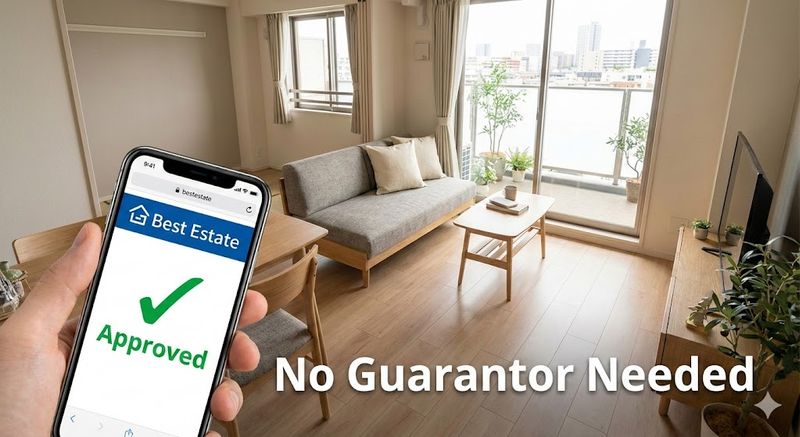
•Stop getting rejected by landlords. Discover 'Best Estate'—the service that lets you rent in Japan with no guarantor, 13-language support, and overseas application.
Great for LINE / WhatsApp sharing
"Sorry, Japanese only."
"Do you have a Japanese Guarantor?"
If you have tried to look for an apartment in Japan, you have probably heard these phrases.
According to surveys, nearly 40% of foreigners have been rejected for housing in Japan simply because of their nationality.
Traditional real estate agents (Fudosan-ya) are often scared of language barriers or payment troubles. (Check our Full Moving Checklist to see what else you need to prepare.)
However, there is a specific service designed to solve exactly this problem. In this review, we introduce Best Estate (powered by GTN), the safest way to secure a home in Japan in 2026.
Find Your Room Now
Search thousands of foreigner-friendly apartments. No guarantor required.
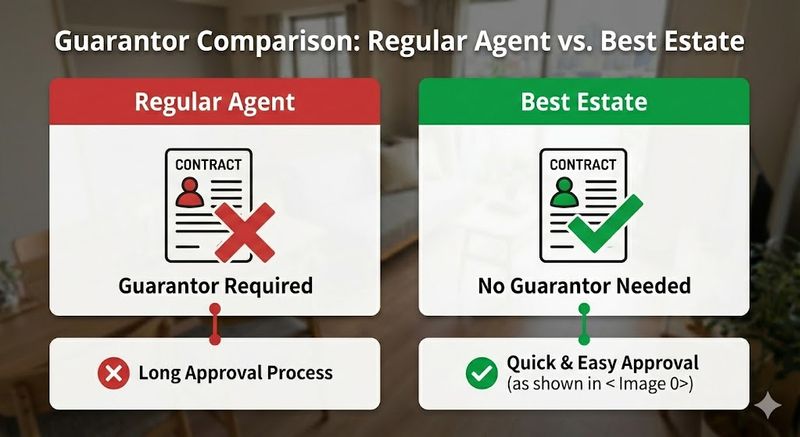
In Japan, renting an apartment usually requires a "Joint Guarantor" (Ren-tai Hoshonin)—a Japanese person who promises to pay your rent if you disappear.
For a new foreigner, finding this person is almost impossible.
Best Estate solves this because it is owned by GTN, Japan's largest "Guarantor Company" for foreigners.
You don't need a Japanese friend to sign.
GTN acts as your guarantor automatically.
Best Estate vs. GaijinPot vs. Regular Agents
How does it compare to other famous services?
Feature
Best Estate (GTN)
GaijinPot Housing
Regular Japanese Agent
Guarantor
Not Needed (Built-in)
Not Needed
Required (Hard)
Language
13 Languages
English
Japanese Only
Apply from Abroad
Yes (Video Call)
Yes
Impossible
Initial Cost
Standard
High (Service fees)
Variable
Success Rate
High (Pre-screened)
High
Low (Many rejections)
Why Best Estate Wins on "Cost"
Many services for foreigners charge extra "Support Fees."
According to our comparison, renting a standard room (¥60,000 rent) for 3 months is cheaper with Best Estate compared to competitors. (Learn more about Hidden Initial Costs here)
Best Estate: Lower initial setup fees because they own the guarantee system.
Competitors: Often add markup fees for English support.
Can I Apply Before Arriving in Japan?
Yes. This is a huge advantage.
With Best Estate, you can:
Search for rooms online.
Do a "Video Room Tour" with staff (Zoom/WhatsApp).
Sign the contract electronically.
Move in on the day you arrive at the airport.
Support is available in English, Chinese, Vietnamese, Korean, Nepali, Indonesian, and 7 other languages.
User Review★★★★★4.5/5
Vietnam User
I was worried because my Japanese is N5 level. The staff explained the contract in Vietnamese, so I understood everything.
Don't Forget the Internet!
When you sign a lease with Best Estate, ask about the "GTN Hikari" bundle.
Standard Japanese internet contracts have a 2-year penalty binding.
GTN Hikari has no cancellation penalty and you get a discount if you also use GTN Mobile.
If you speak perfect Japanese and have a Japanese guarantor, you can use a local agent (SUUMO/Homes).
But if you want to avoid rejection and secure a home quickly (even from overseas), Best Estate is the industry standard.
No Guarantor? OK.
No Japanese? OK.
Overseas? OK.
Start Your Room Search
Browse available apartments for foreigners. Fast screening and multilingual support.
Q: Why do Japanese landlords require a guarantor and what can foreigners do instead?
A: Japanese rental custom requires a guarantor (保証人, hoshounin) — typically a Japanese national with stable income — to vouch for the tenant. Foreigners without Japanese relatives or colleagues often use guarantor companies (保証会社, hoshougaisha) or specialist services like Best-Estate that bundle a guarantor service into their rental offering.
Q: What is Best-Estate and how does it help foreigners rent in Japan?
A: Best-Estate is a rental agency specifically designed for foreigners, offering no-guarantor rental contracts, 13-language support, and the ability to apply from overseas before arriving in Japan. They handle the guarantor issue on behalf of the tenant.
Q: Are there any other services besides Best-Estate for renting without a guarantor?
A: UR Housing (public housing) requires no guarantor and is open to foreigners with a Residence Card and sufficient income. Village House also waives the guarantor requirement. Apts.jp and GaijinPot Housing list properties friendly to foreign applicants.
Q: How much income is typically required to pass apartment screening in Japan?
A: Standard screening requires monthly income of at least 3x the monthly rent. For a ¥70,000 apartment, you need to demonstrate income of at least ¥210,000/month (¥2,520,000/year). This can be shown via employment certificate or tax return.
Q: Can I rent an apartment in Japan on a tourist visa?
A: No. Most rental contracts require a Residence Card and valid long-term visa status. Short-stay tourist visas do not qualify. However, share houses and monthly serviced apartments (like sakura house) may accept foreign nationals without a Residence Card for shorter stays.
Yushi Yamamoto
CEO / Native Japanese Expert
Updated on: June 11, 2026
Disclaimer
※ The information in this article is accurate as of the time of writing. Laws and regulations may change, so please always check official sources for the latest information. We assume no liability for any damages resulting from the content of this article.