【Side Hustles for Foreigners】 The Ultimate Guide to Japanese Crowdsourcing & Earning with Your Residence Card
Published on January 3, 2026
Updated on July 1, 2026
Author:JapanLifeStart Editorial Team
Work & Study
How this guide is checked
Updated against official, partner, and reviewed site evidence where available.
Last updated: July 1, 2026
Source separation
Official or partner facts are separated from practical notes.
Fast-changing details
Prices, screening, documents, and rules can change.
Affiliate link handling
Some next-step links may be monetized.
Needs review: Approval, visa/tax/legal, availability, and campaign terms are not guaranteed. Confirm on the official or partner page.
💌
Send to Friends (Summary)
•A must-read for foreigners wanting to start a side hustle in Japan. We explain how to break through the "KYC barrier" that often blocks registration on Coconala and CrowdWorks, and how to safely earn money using your Residence Card. This complete guide covers everything from avoiding bank account troubles to visa precautions and monetizing via affiliate marketing.
Great for LINE / WhatsApp sharing
The Japanese labor market is currently at a major turning point. Due to labor shortages and "Work Style Reform," the market for "crowdsourcing"—which allows people to work without being tied to a specific time or place—is expanding rapidly.
For foreign residents armed with language skills and cross-cultural understanding, this presents a massive opportunity. However, when you actually try to register on Japanese platforms (CrowdWorks, Lancers, Coconala), you often hit an "Invisible Wall."
"My passport issued after 2020 isn't accepted."
"Bank transfers fail because my name format doesn't match."
"I'm worried if I can legally work this way under my visa."
In this article, we thoroughly analyze the unique "domestic ecosystem" of Japan's crowdsourcing market and provide a concrete roadmap for foreigners to overcome these technical and legal barriers to start earning.
The First Barrier: Identity Verification (KYC) and the "2020 Problem"
The biggest barrier to entry in Japanese crowdsourcing is the Identity Verification (KYC) process immediately after registration. Strict rules based on Japanese law (Act on Prevention of Transfer of Criminal Proceeds) can be incredibly confusing for foreign users.
What is the "2020 Passport Problem"?
From February 4, 2020, the "bearer's contact information" field (where your address would be) was removed from newly issued Japanese passports. Consequently, many platforms started a strict policy of not accepting passports issued in 2020 or later as valid documents for address verification.
This affects foreigners as well. Even with a foreign passport, you often face restrictions like "must be issued within Japan" or requirements to submit supplementary documents (like a Certificate of Residence/Juminhyo), leading to frequent rejections.
How Each Platform Handles Foreigners (KYC)
Platform
Residence Card Support
Passport Limits
Difficulty
Coconala
◎ (eKYC supported)
Pre-Feb 2020 only
Low (Easy)
CrowdWorks
△ (Unclear)
Domestic issue only
Medium
Lancers
○ (Proost recommended)
-
High (Hard)
Lancers uses a sophisticated authentication system called "Proost," but for foreigners without a "My Number Card," the hurdles are high, and manual review can take several days.
On the other hand, CrowdWorks is extremely conservative regarding address verification. If you submit a Japanese Health Insurance Card, you must be careful: if you fail to mask (cover) the "Symbol," "Number," and "Insurer Number," your application will be rejected immediately.
The Key to Success: "Coconala" for Same-Day Debut
The smoothest way to break through the KYC wall is Coconala.
User Review★★★★★5/5
Senior Writer's Eye
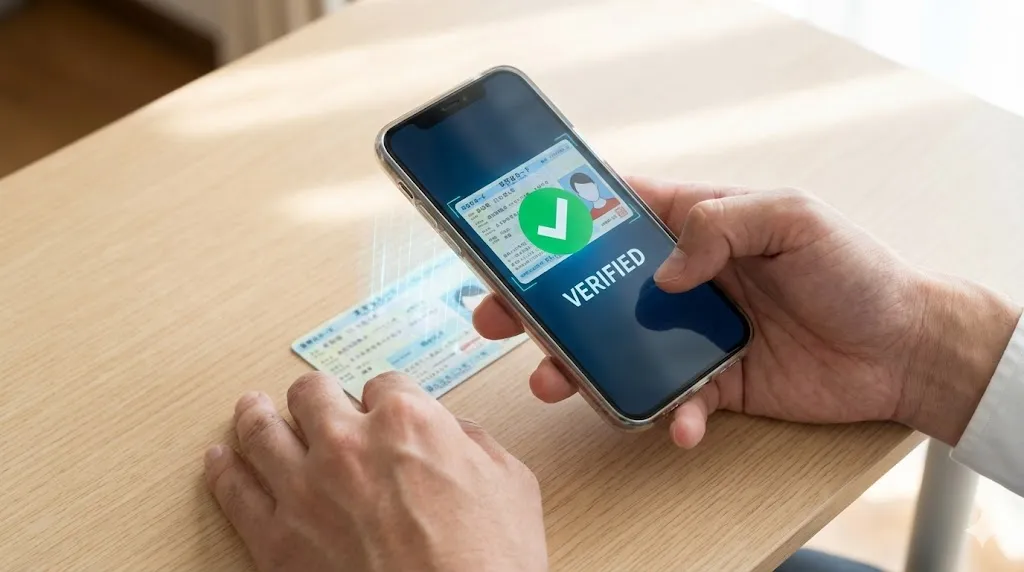
Coconala uses 'eKYC' provided by Liquid, Inc., allowing you to complete identity verification simply by taking a photo of your Residence Card and your face with your smartphone. The biggest advantage for foreigners is that approval can happen as quickly as the same day, provided your address matches exactly (e.g., '1-2-3' vs. '1-chome 2-ban 3-go').
Your shortest route to the Japanese market is to clear identity verification on Coconala first and establish yourself as a "Seller."
Instant Registration with Smartphone & Residence Card
No tedious mail verification required. With Coconala, you can turn your language skills into a product immediately.
2. CrowdWorks: #1 in Volume, But Requires Strategy
CrowdWorks, one of Japan's largest platforms, is attractive due to the sheer volume of jobs, but registration requires some tricks.
Caution:
If submitting documents like a Health Insurance Card, "masking" (redacting) the specific symbols, numbers, and insurer numbers is mandatory. Forgetting this leads to instant rejection. Many users also stumble when inputting the Katakana reading of their names.
Strategy:
Avoid "Task" category jobs as the unit price is too low (10–50 JPY), making them a waste of time. Focus your applications on project-based "Translation" or "Overseas Market Research" jobs.
Check CrowdWorks: #1 in Job Volume
If you are looking for translation or overseas research jobs, look here. Registration is free.
💡 Pro Tip: Check the Niche "Craudia"
If CrowdWorks' screening is too strict, we recommend Craudia, which has some of the lowest system fees in the industry. There are fewer rivals here, making it a hidden gem.
"I Can't Get Paid!" Banking & The Zengin System Trap
Even after working hard to complete a job, issues often arise at the stage of receiving your reward: the "Bank Account" problem. This is because Japan's "Zengin System" (the domestic fund transfer network) basically manages account names in "Full-width Katakana."
1. "John Smith" vs. "ジョン スミス"
With international services like Wise (formerly TransferWise) or some online banks, your account name might be registered in the alphabet (e.g., JOHN SMITH). However, transfer systems like CrowdWorks' often require a match in "Full-width Katakana." This name mismatch causes transfer errors (and the money gets sent back).
2. Recommended Banking Strategy
To avoid trouble, here is the optimal solution for foreign users:
Rakuten Bank: The transfer fee from CrowdWorks is only 100 JPY (compared to 500 JPY for other banks), and it's easy to manage online. Recommendation: S
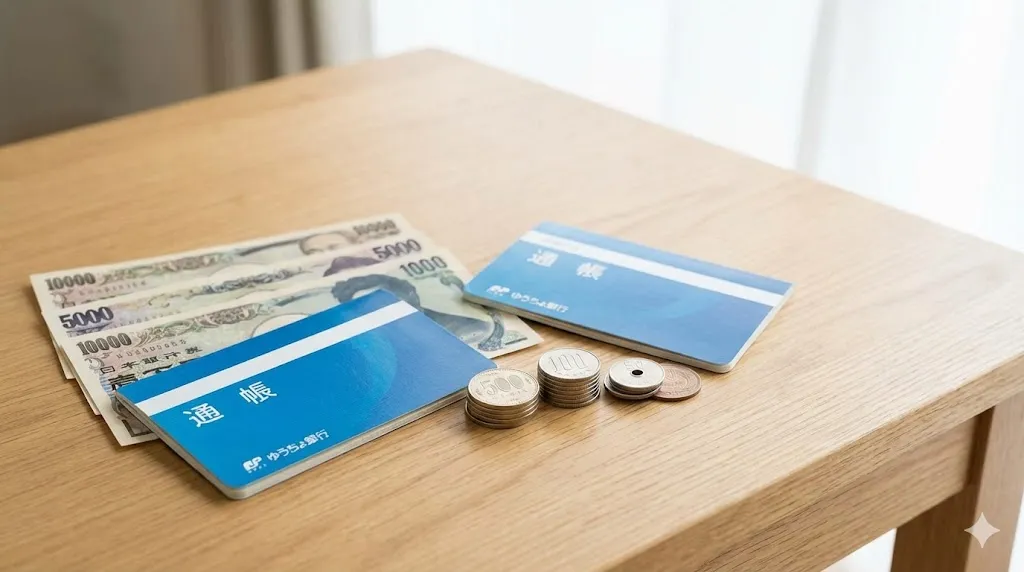
Japan Post Bank (Yucho): Easy to open with ATMs everywhere, but fees are higher. Recommendation: A
Wise: Great for sending money overseas, but be careful using it as a receiving account for domestic rewards due to the name mismatch risk.
👨
Receive your rewards in 'Rakuten Bank,' and only use 'Wise' when sending money back to your home country. This is the ironclad rule to minimize fees and trouble.
Wise: The Standard for Int'l Transfers
An essential tool for sending the rewards you earned in Japanese banks back home—cheaply and quickly.
Visas and Taxes: "Illegal Work" and the "20.42%" Rule
Adhering to Visa (Residence Status) Limits
If you hold a "Engineer/Specialist in Humanities/International Services" visa and want to do a side hustle, please strictly observe the following rules:
OK (Within Scope): Translation, interpretation, programming, design, marketing, etc. These can usually be done without individual permission.
NG (Unskilled Labor): Data entry, sticker application, packing/shipping, etc.
Simple/unskilled labor is considered "activity outside the scope of your status" and risks denial when you try to renew your visa. Stick to jobs that utilize your specialized skills.
The "20.42% Withholding Tax" for Non-Residents
If you are treated as a "Non-Resident" (e.g., no registered address in Japan), a flat 20.42% withholding tax will be deducted from your earnings.
To claim this back later (tax refund), you would need to appoint a "Tax Agent" (Nozei Kanriin) in Japan, which is not cost-effective for small side hustles. When using Japanese crowdsourcing from overseas, you need to set your unit prices high enough to account for this tax.
Market Value: English Rates and the "Affiliate" Option
Realistic Rates for English Projects
In Japanese translation projects, "price per character" is the standard.
Japanese-English Translation:1.0 JPY~ per character (Prices are dropping due to DeepL, etc.)
Specialized Translation (Medical/IT):5.0 JPY~ per character
Voiceover/Narration:3,000 JPY – 5,000 JPY per few hundred words.
While simple translation faces fierce price competition, "English Narration" and "Native Checks" on Coconala represent a Blue Ocean that AI cannot yet replace.
Breaking Free from Labor: Affiliate Marketing
Crowdsourcing is ultimately "selling your time." To earn smarter, try Affiliate Marketing (ASP) by turning your own "experience of side hustles in Japan" into content to earn advertising revenue.
Information like "How to register on Coconala with a Residence Card" or "How to pass CrowdWorks identity verification" is exactly what other foreigners following in your footsteps are desperate to know.
A8.net, Japan's largest ASP, allows registration without a screening process and offers referral programs for Coconala and CrowdWorks.
Turn Experience into Income with A8.net
Why not share Japanese side hustle info on a blog or social media? It's Japan's largest affiliate service, and registration is free with no screening.
The Japanese crowdsourcing market may look like a "walled garden," protected by high barriers of identity verification and banking systems. However, for foreigners who successfully navigate the proper procedures to get inside, it is an exclusive market with very few international competitors.
Start by making your "first sale in Japanese Yen" on Coconala, where barriers to entry are lower, to build your confidence. Understanding the quirks of the system and maneuvering strategically is the key to conquering this market.
Start Selling on Coconala Now
Japanese companies are waiting for your 'voice' and 'language skills.' Registration is free.
Q: Can foreigners in Japan do remote work for overseas companies as a side job?
A: Working remotely for an overseas company while on a Japanese work visa is a legal gray area. Income earned from foreign companies while residing in Japan is taxable in Japan as resident income. The visa question: if you are already working full-time on a work visa in Japan, adding a foreign remote job may technically require 資格外活動許可 unless your visa allows full freedom of work.
Q: What are popular remote side hustles for foreigners living in Japan?
A: Popular options: (1) English tutoring online (iTalki, Preply, local SNS groups), (2) Freelance writing/content creation (overseas clients in English), (3) Graphic design or programming on overseas platforms (Upwork, Fiverr, Toptal), (4) Translation (Japanese↔English/other), (5) Affiliate marketing or blogging.
Q: Do I need to declare overseas freelance income on my Japanese tax return?
A: Yes. Japan taxes world-wide income for residents. All income — including freelance payments from overseas clients via PayPal, Wise, or direct bank transfer — must be declared in your 確定申告. You can deduct business expenses (home office, equipment, software subscriptions) to reduce taxable income.
Q: What is the best platform to find remote work from Japan for overseas clients?
A: Best platforms: Upwork (programming, design, writing), Toptal (senior engineering), Fiverr (specific skills), LinkedIn (professional contracts), Contra (no-fee platform for developers). Japanese-language platforms (CrowdWorks, Lancers) also have remote opportunities from domestic Japanese clients.
Q: How much can you realistically earn from a side hustle while working full-time in Japan?
A: Realistic side hustle earnings while employed full-time: English tutoring ¥50,000–150,000/month (10–20 students, 1–2 hours/student/week), freelance writing ¥50,000–200,000/month, programming side contracts ¥100,000–500,000/month depending on hours. Side income over ¥200,000/year must be reported in 確定申告 separately from your employer's 年末調整.
Yushi Yamamoto
CEO / Native Japanese Expert
Updated on: July 1, 2026
Disclaimer
※ The information in this article is accurate as of the time of writing. Laws and regulations may change, so please always check official sources for the latest information. We assume no liability for any damages resulting from the content of this article.