[2026 Update] Gaimen Kirikae is Now "Hard Mode"? How to Beat the 50-Question Test & Residency Rules
"Converting your license to a Japanese one (Gaimen Kirikae) is easy, right? Just submit some papers and take a simple quiz?"
If that is what you have heard, delete that thought from your mind immediately. That is old news from before September 2025.
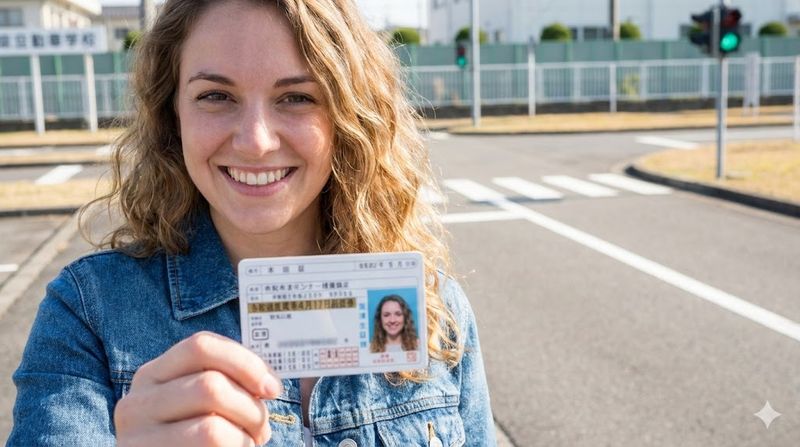
With the legal amendments in October 2025, Gaimen Kirikae has switched from a "Bonus Stage" to "Hard Mode." Tourists are now excluded, the written test has become significantly harder (from 10 questions to 50), and the practical driving test is now so strict that even professional Japanese drivers fail.
In this article, we cover the latest drastic rule changes and explain the "Japanese Acting" techniques you need to break through the 20% pass rate barrier. Read this to save yourself thousands of yen in wasted exam fees and get on the Japanese roads in the shortest time possible.
And once you get your license, start your free Japanese life with a "Car Subscription" that lets you drive a brand new car without the hassle of strict loan screening.
Got your license? Get a new car instantly.
Reward yourself for your hard work. With 'SOMPO de Noru', you can drive a new car with 0 down payment and insurance/taxes included. Check out the available models on the official site!
[URGENT] How Did "Gaimen Kirikae" Change in October 2025?
Converting a foreign license used to be an "easy hack," but now only drivers who can truly adapt to Japanese traffic society can pass. Here are the three main changes:
1. Tourists are "Rejection on Sight" (Resident Record Required)
Previously, some could apply using hotel accommodation certificates, but now submission of a "Juminhyo" (Resident Record) is strictly required. This means that unless you have a mid-to-long-term visa and are registered at a city hall in Japan, you cannot even take the test.
Is your Resident Record ready?
To stand at the starting line of Gaimen Kirikae, you first need a Juminhyo. Check this guide for how to get one and whether to include your My Number.
2. Written Test Increased from "10" to "50" Questions
This is the biggest change. Previously, it was a simple "True/False quiz of 10 questions (7 correct to pass)," but it has now hardened into "50 text questions (90% correct to pass)."
You will be asked about the meanings of signs, no-parking zones, and priority road rules at the same level as Japanese applicants. You cannot pass on luck alone.
3. Stricter Scoring for Driving Skills
The Driving Skill Test has also become more severe. Checks for "Stop Signs," "Safety Confirmation," and "Pedestrian Protection" are merciless. If you neglect even one check, the exam is over immediately.
Are You "Exempt"? Or Must You Take the Exam?
Your fate depends heavily on the issuing country of your license.
Lucky "Exempt" Countries (29 Countries/Regions + 4 US States)
Holders of licenses from the following countries/regions are exempt from the written and driving tests (document screening and vision test only).
- Europe: UK, Germany, France, Italy, Spain, etc.
- Asia/Oceania: Australia, New Zealand, South Korea, Taiwan
- North America: Canada, USA (Ohio, Virginia, Hawaii, Maryland, Washington ONLY)
Strict "Exam Required" Countries
Countries not on the list above must take both the written (50 questions) and driving tests.
- Major Countries: China, Brazil, Vietnam, Philippines, India, Nepal, Russia, USA (California, New York, and other states not listed above)
[Critical] The 3-Month Stay Rule
Regardless of your country, there is one condition you absolutely must clear: "You must have stayed in that country for a total of 3 months or more after obtaining the license."
This is strictly checked via passport entry/exit stamps. If you used automated gates and have no stamps, you must obtain proof of entry/exit records. If you cannot prove this, your application will be 100% rejected.
The Hardest Part: "Acting Skills" to Pass the Driving Test

Even if you pass the written test, the biggest barrier, the "Skill Test," awaits. The pass rate is only 20-30%.
Why do so many foreign drivers fail? It is not because they are bad at driving. It is because they are not doing "Japanese Exam Driving (Acting)."
Japanese examiners are not looking at your driving technique, but at your "Performance of Safety Confirmation." Execute the following techniques "exaggeratedly."
1. "Head Turning" Must Be Over-the-Top
Just moving your eyes to check the mirrors will be judged as "not looking" by the examiner.
- Action: Turn your head exaggeratedly more than 90 degrees to convey to the examiner, "I AM LOOKING!"
- Timing: 3 seconds before changing lanes, right before turning left/right, and when starting.
2. Stop Signs Mean "Complete Stop" + "3-Second Count"
At a "Tomare (STOP)" sign, your tires must completely stop rotating.
- Action: Stop dead right before the Stop Line. Then count "1, 2, 3" in your head before checking left and right and proceeding. A "rolling stop" (slow down) results in failure.
3. Keep Left
Japan drives on the left, but in the test, you are required to "Drive on the far left edge of the road."
- Action: Keep within 50cm-1m of the left white line during normal driving. Only move to the center line when turning right. Driving vaguely in the middle of the road will result in point deductions.
4. The Courage to Stop in S-Curves and Cranks
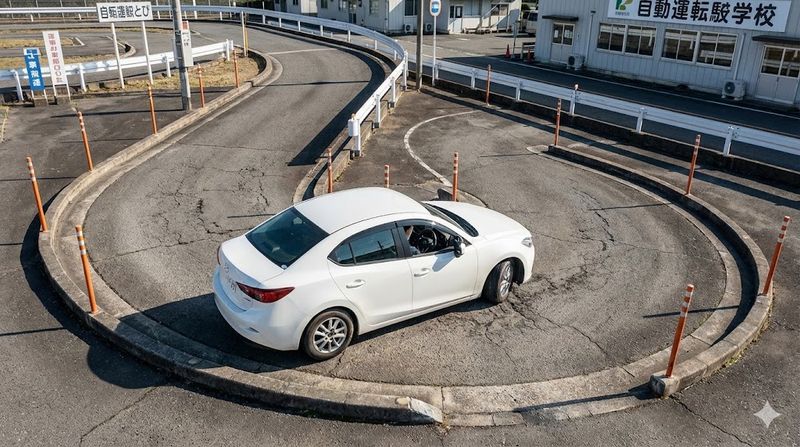
In narrow S-curves or Crank courses, hitting the curb or touching a pole means immediate termination.
- Action: If you think "I might hit it," stop immediately and reverse (switch back). Reversing once is not penalized (or only a small deduction). It is far better than hitting the curb and failing the test.
Required Documents and Procedure Flow (Complete List)
Before heading to the battlefield (Exam Center), gather your weapons (documents). If even one is missing/incorrect, you will have to rebook, losing weeks or months.
- Valid Foreign Driver’s License: Original required.
- Japanese Translation of License: Important! Self-translations are invalid. You must use one issued by "JAF (Japan Automobile Federation)" or your embassy/consulate.
- Passport: Having all past passports (to prove stay duration) provides peace of mind.
- Residence Card (Zairyu Card): Must be valid.
- Copy of Resident Record (Juminhyo): Must list your Nationality/Domicile but MUST NOT list your My Number (varies by region, please confirm).
- Application Photo: 3cm x 2.4cm. No background.
- Fees: Application fee, issuance fee, etc. (Approx. 5,000 yen+).
Is your Residence Card ready?
Basic information on Residence Cards and various IDs required for procedures is explained in this complete guide.
Got the License? What About a "Car"?
Once you clear the hurdle of the license (Gaimen Kirikae), the next step is your long-awaited own car. However, here too, the "Loan Wall" stands in the way of foreigners.
Japanese banks and credit companies conduct very strict auto loan screenings for foreigners without permanent residency. Many people say, "I have a license, but I can't buy a car."
That is why we recommend "Car Leasing (Car Subscription)" as an option.
Why "SOMPO de Noru" is the Strongest Choice for Foreigners
Among car leases where you can drive a new car with 0 down payment, "SOMPO de Noru" (partnered with Sompo Japan) is particularly recommended.
- 0 Down Payment: You can start your new car life without large savings.
- All-in-One Flat Rate: Inspection fees (Shaken), insurance premiums, and taxes are all included in the monthly fee. No need to manage complex payments or procedures.
- Import Cars Available: You can choose not only Japanese cars but also your dream foreign luxury cars.
There is a screening process, but it is often more flexible than bank loans, and above all, it solves the headache of "I don't understand Shaken or tax procedures" for foreign drivers in one go.
Got your license? Get a new car instantly.
With 'SOMPO de Noru', you can drive a new car with 0 down payment and insurance/taxes included. Start your own car life without the hassle of paperwork.
If You Keep Failing... (The Courage to Give Up)
Finally, some realistic advice.
If you fail the skill test 3 times or more, your driving habits likely deviate significantly from Japanese testing standards.
If you continue taking the test as is, you will fall into a "quagmire" of wasting over 100,000 yen in exam/practice fees and losing more than half a year.
In that case, swallow your pride and consider "Going to a Japanese Driving School." Specifically, a "Driving Camp (Gasshuku)" can ensure you get a Japanese license in about 2 weeks of intensive training. It costs more upfront, but it often saves time and money in the long run.
Conclusion

In 2026, Gaimen Kirikae is by no means "easy." However, if you prepare correctly and thoroughly perform the "Japanese Style Acting," you can definitely pass.
- Perfectly prepare your Juminhyo and proof of 3-month stay.
- Study Japanese traffic rules (especially numbers and signs) for the written test.
- Act out "Exaggerated Head Turning" and "Complete Stops" in the skill test.
Clear these 3 steps and gain the freedom to enjoy Japan's beautiful four seasons by car!