[Edição 2026] A Realidade Salarial dos Engenheiros Estrangeiros no Japão: O Lado Sombrio do SES e a Rota de "Fuga" para Ganhar 10 Milhões
Published on 22 de janeiro de 2026
Updated on 27 de julho de 2026
Author:JapanLifeStart Editorial Team
Trabalho e estudo
Como este guia e verificado
Atualizado com fontes oficiais, parceiros e evidencias revisadas quando possivel.
Ultima atualizacao: 27 de julho de 2026
Separacao de fontes
Fatos oficiais/de parceiros ficam separados das notas praticas.
Detalhes que mudam
Precos, analise, documentos e regras podem mudar.
💌
Enviar para amigos (Resumo)
•[Edição 2026] O salário "médio" dos engenheiros estrangeiros no Japão é uma mentira? Dados revelam a forte polarização entre cargos de "SES de 4 milhões" e posições em "Empresas Estrangeiras de 10 milhões". Expomos o "Imposto Linguístico (Language Tax)" — onde melhores habilidades em japonês podem reduzir seu salário — e explicamos estratégias concretas para escapar dessa exploração e dobrar sua renda usando agentes como TechGo e Midworks.
Ótimo para compartilhar no LINE / WhatsApp
"Se você se tornar engenheiro no Japão, receberá um salário médio anual de 6 milhões de ienes."
Se você acredita nisso, este artigo pode salvar sua carreira.
Em 2026, o mercado de engenheiros estrangeiros no Japão está brutalmente "polarizado". De um lado, há o mundo de padrão global com salários anuais superiores a 10 milhões de ienes. Do outro, o mundo do SES (terceirização em clientes), onde você continua sendo explorado por um salário mensal de apenas 200 mil ienes.
Muitos engenheiros talentosos são enganados pela mágica estatística da "média salarial" japonesa e acabam trabalhando por menos da metade do que realmente merecem.
Neste artigo, expomos a "crua realidade salarial da indústria de TI japonesa" que não aparece nas estatísticas e a armadilha do "Imposto Linguístico (Language Tax)" — onde, ironicamente, quanto melhor for o seu japonês, menor tende a ser o seu salário. Por fim, apresentamos "rotas de fuga" concretas para sair dessa estrutura e obter a compensação justa pelas suas habilidades (salário anual de 10 milhões de ienes ou mais).
Qual é o seu salário justo?
Trabalhar sem saber seu valor de mercado pode custar milhões de ienes por ano. Primeiro, verifique seu valor real com as vagas não publicadas da TechGo.
Como você pode ver, mesmo sendo o mesmo "Engenheiro Java" ou "Desenvolvedor Web", apenas por estar em uma camada (tier) diferente, a diferença salarial pode ser de 3 a 4 vezes.
Nas camadas Tier 4 e inferiores (SES), não é raro que o salário líquido mensal (take-home pay) fique em torno de 200 mil a 250 mil ienes. Considerando o aumento do custo de vida em Tóquio e a desvalorização do iene, isso não é um nível para "prosperar (Thriving)", mas apenas para "sobreviver (Surviving)".
👨
Acredite ou não, portadores de N1 fluentes em japonês tendem a ser contratados por empresas Tier 4 com salários baixos. Essa é a verdadeira face do 'Language Tax'.
Não confie nas médias. Seu objetivo não deve ser a média, mas sim migrar para o "Tier 1 / Tier 2".
※ Para a realidade do custo de vida em Tóquio, consulte o artigo abaixo.
[2026] Custo de vida morando sozinho em Tóquio: a partir de 140 mil/mês
Detalhes reais de aluguel e contas, e guia para cortar custos fixos para conseguir poupar.
A Verdadeira Razão Pela Qual Seu Salário Não Aumenta: O Lado Sombrio do "SES" e o "Fluxo Comercial"
Por que seu salário líquido é baixo? Não é porque suas habilidades são baixas. É porque o "Fluxo Comercial (Shoryu)" é muito profundo.
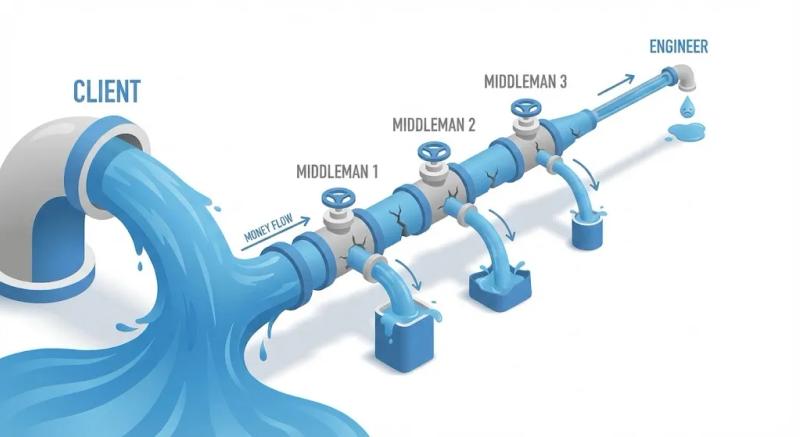
A indústria de TI japonesa possui uma "estrutura de subcontratação em camadas" semelhante à indústria da construção civil.
Cliente (Contratante)
Contratante Principal (Prime Vendor)
Subcontratado Secundário (SES começa aqui)
Subcontratado Terciário
Sua Empresa
Você
Nessa estrutura, cada vez que o contrato passa por uma empresa, uma margem (comissão) é retirada. Em japonês, isso é chamado de "Nakanuki" (Intermediação/Skimming).
Mesmo que o cliente pague 800 mil ienes por mês pelo seu trabalho, quando o dinheiro chega na sua conta, ele encolheu para 250 mil ienes. Esse é o mecanismo estrutural de exploração do SES.
Gritos do Campo
Nas redes sociais e comunidades, as seguintes realidades são relatadas:
Tarefas triviais durante a espera: No período sem projetos, engenheiros são forçados a fazer tarefas que podem violar as condições do visto (como limpar o escritório ou lavar pratos em restaurantes afiliados).
A armadilha das "Horas Extras Fixas": Empresas abusam de contratos que "incluem 40 horas extras no salário base" (Minashi Zangyo) para forçar longas jornadas sem pagar adicional.
Se você permanecer neste lugar, seu salário nunca aumentará. Você precisa mudar a estrutura em si.
※ O mecanismo das agências de recrutamento no Japão é explicado em detalhes no artigo abaixo.
Guia Completo de Agências de Emprego para Engenheiros de TI
Sites de emprego compatíveis com inglês, padrões de falha ao escolher agências e como evitá-los.
A Verdade Paradoxal: Quanto Melhor o Japonês, Menor o Salário ("Language Tax")
Normalmente, quanto maior a capacidade linguística, maior deveria ser o salário. No entanto, um fenômeno paradoxal ocorre no mercado de engenharia japonês.
"Engenheiros com nível N1 de japonês são sugados para SIers de baixos salários (Tier 4)."
Chamamos isso de "Language Tax (Imposto Linguístico)".
Ambiente em Inglês (Tier 1): Empresas globais com capital valorizam mais as "Habilidades Técnicas (Go, Rust, Cloud, etc.)" do que a habilidade em japonês e pagam salários de padrão mundial.
Ambiente em Japonês (Tier 4): As SIers tradicionais japonesas valorizam mais a "Comunicação em Japonês (ler o ambiente)" e o "Preço Baixo" do que as habilidades técnicas.
O resultado de estudar japonês desesperadamente é acabar preso no "salário por tempo de casa" e na "estrutura de intermediação" japonesa. Se você confia na sua tecnologia, depender apenas do japonês como arma é perigoso.
Rota de Fuga A para Dobrar o Salário: Mudança de Carreira High-Class
Aqui estão as soluções concretas.
Esta é a rota para engenheiros atualmente desgastados no SES (Tier 4/5) saltarem para o Tier 1/2 de uma só vez.
Alvo: Experiência prática de 3 anos ou mais, habilidades modernas (AWS, Python, React, etc.).
Candidatar-se sozinho por sites de emprego (como LinkedIn ou Indeed) não é a melhor estratégia. Isso porque as empresas costumam olhar para o seu "salário atual" (ex: 4 milhões) e basear a oferta nele.
Para dobrar seu salário, você precisa de um Agente Especializado em High-Class que avalie corretamente "seu valor de mercado" e negocie com a empresa.
Agente Recomendado: TechGo
Se você almeja uma mudança de carreira de alto nível, a [TechGo] será sua parceira mais forte.
Negociação Baseada no Valor de Mercado: Eles negociam seu salário com base em "quanto suas habilidades valem no mercado", e não no seu "salário atual".
Qualidade das Vagas Privadas: Eles possuem muitas vagas não públicas de Mega Ventures e empresas de DX (Transformação Digital) na faixa de "8 milhões a 12 milhões de ienes" que raramente aparecem para o público geral.
Estratégia de Carreira: Não é apenas um "matching" simples; eles são bons em propor planos de carreira (candidatos a CTO, Tech Lead, etc.).
Se você está em dúvida "Será que minhas habilidades são suficientes?", deveria ao menos fazer uma consultoria. Você pode descobrir "habilidades de alto valor" que nem sabia que possuía.
Você está pronto para escapar do SES?
Suas habilidades podem valer o dobro do que você ganha hoje. Confirme seu verdadeiro valor de mercado com as vagas privadas da TechGo.
Rota de Fuga B para Dobrar o Salário: Freelance com "Segurança de Funcionário Efetivo"
A outra rota é descartar a "placa da empresa" e tornar o fluxo comercial mais raso (reduzir os intermediários). Ou seja, tornar-se Freelancer.
Em vez de ser "protegido" pela empresa como funcionário efetivo (Seishain) mas ter grande parte do salário retida, você assina contratos em uma posição mais próxima do cliente. Com isso, o valor unitário salta imediatamente para 800 mil ienes/mês ou mais (Faturamento anual de 9,6 milhões ou mais).
No entanto, para engenheiros estrangeiros, tornar-se freelancer tem duas barreiras: "Visto" e "Instabilidade de Renda". A solução para isso é a [Midworks].
Serviço Recomendado: Midworks
A [Midworks] é um serviço que combina o melhor da liberdade de um Freelancer com a segurança de um Funcionário Efetivo.
User Review★★★★★5/5
Senior Engineer Choice
Para engenheiros estrangeiros que querem ser freelancers mas se preocupam com visto e renda, o sistema de garantia da Midworks é a rede de segurança mais forte.
Sistema de Garantia de Salário: Mesmo que o projeto seja interrompido, existe um sistema que garante o salário (remuneração) diário (sujeito a análise). Isso reduz drasticamente os riscos exclusivos do freelancer.
Benefícios comparáveis a Funcionários Efetivos: O suporte com seguros e impostos é robusto, tornando seguro até para quem está entrando no mercado freelance japonês pela primeira vez.
Projetos de Alto Valor: Há abundância de projetos diretos com o cliente final, tornando realista dobrar o salário líquido da era SES.
Se você tem o desejo "ganancioso" de "não querer correr riscos, mas querer aumentar o salário", esta é a solução ideal.
※ Certifique-se de verificar o guia completo abaixo sobre os procedimentos de freelance e detalhes do visto.
Como estrangeiros podem se tornar engenheiros freelancers no Japão
Explicação desde como manter o visto até os passos concretos para mirar em 10 milhões/ano.
Respondemos às dúvidas que você inevitavelmente enfrentará ao escapar da exploração.
Q: É possível ser freelancer com o visto de "Engenharia / Humanidades / Serviços Internacionais"?
A: Sim, é possível. Porém, há condições.
Mesmo atuando como Freelancer (Empresário Individual / Kojin Jigyo Nushi), a categoria do visto não muda. O importante é "ter contratos contínuos e estáveis" e "notificar a Imigração sobre a organização afiliada (empresa contratante)". Através de agentes como a Midworks, a comprovação de contratos é mais fluida, facilitando o gerenciamento do risco de renovação do visto.
Q: Como mudam o Imposto Residencial e o Seguro Social?
Ao mudar de funcionário efetivo para freelancer, você troca a Previdência Social/Seguro Social (Shakai Hoken) para "Previdência Nacional / Seguro Nacional de Saúde (Kokumin Hoken)". Embora o trabalho de pagar por conta própria aumente, como você pode deduzir despesas (parte do aluguel, custo do PC, etc.), na maioria dos casos, o dinheiro líquido (fluxo de caixa) que sobra na mão aumenta significativamente.
※ Para regras detalhadas sobre renda extra e impostos, verifique o artigo abaixo.
Guia Completo de Side Hustle & Crowdsourcing no Japão
Abrange cuidados com o visto, declaração de imposto ([Kakutei Shinkoku](/en/money-cards/japan-tax-return-software-guide-2026)) e como ganhar dinheiro com o Zairyu Card.
No mercado de engenheiros estrangeiros no Japão, o salário não aumentará se você apenas "esperar". Você continuará em um lugar onde é estruturalmente explorado ou gerenciará o risco para mudar de ambiente? A escolha é sua.
Suas habilidades podem valer o dobro do seu salário atual. Comece descobrindo seu "verdadeiro valor de mercado".
Próximo Passo (Next Step):
Se deseja evoluir na carreira através de uma Mudança de Emprego High-Class:
Use a [TechGo] para confirmar quanto suas habilidades atuais valem.
Se deseja maximizar a renda líquida controlando os riscos:
Use a [Midworks] para procurar se há projetos com valor unitário mensal acima de 800 mil ienes.
Primeiro, colete informações:
Aprofunde seu entendimento sobre a situação das agências no Japão com os artigos relacionados introduzidos no texto.
Como Ler um Holerite Japonês: Kyuyo Meisai Explicado para Trabalhadores Estrangeiros (2026)
Yushi Yamamoto
CEO / Native Japanese Expert
Atualizado em: 27 de julho de 2026
Isenção de responsabilidade
※ As informações neste artigo são precisas no momento da redação. Leis e regulamentos podem mudar, portanto, verifique sempre as fontes oficiais para obter as informações mais recentes. Não assumimos responsabilidade por quaisquer danos resultantes do conteúdo deste artigo.