
Short answer: For most foreigners, Uber Eats is the easiest place to start (English UI, nationwide coverage). Wolt suits major cities when you want responsive English support. Demae-can lists more local shops but is Japanese-only. The cheapest option this week usually depends on first-time coupons and delivery-fee promos—not one app winning every time.
Below we compare fees, English support, payment options (including ordering without a credit card), and a coupon-hopping plan to keep meals under ¥500.
For your first month in Japan, you can cut your food costs in half just by using coupons. Use these tools to settle in without breaking the bank.
2026 Edition: The Big 3 Japan Food Delivery Apps Compared
First, let's look at the main options for foreigners living in Japan. As of 2026, the battle for "English Support" and "Subscriptions" is fierce.
Service Comparison Matrix
| Feature | Uber Eats | Wolt | Demae-can | Rocket Now |
|---|
| English | ◎ (Native) | ◎ (High Quality) | × (Japanese Only) | ◯ (Simple) |
| Area | Nationwide | Major Cities | Nationwide (Dense) | Tokyo/Osaka/Etc |
| Intl. Cards | ◎ (Stable) | ◎ (Stable) | △ (3D Secure Required) | ◯ (Standard) |
| Subscription | Uber One | Wolt+ | None | Free Delivery Promo |
| Best For | Infrastructure | Great Support | Local Shops | Zero Fees |
How to Choose
- Uber Eats: When in doubt, choose this. The app interface is identical to the global version, and English support is solid. If you order a few times a month, the "Uber One" subscription (free delivery) is a must.
- Wolt: For a premium experience. Originating from Northern Europe, Wolt has a sleek UI and incredibly helpful chat support (in English). If an order gets messed up, they fix it fast.
- Demae-can: For local food. It's Japanese only, but it lists many local diners and sushi shops that aren't on other apps. It's worth using a translation tool to access these hidden gems.
- Rocket Now: The 2026 Disrupter. Currently running a "Zero Delivery Fee" campaign. If you are in their coverage area, it's the cheapest option.
Comparison is good, but you can save even more by being smart about Groceries and Daily Essentials.
Groceries Delivered in 10 Minutes
Heavy water, rice, and even Costco items delivered via app. Use the first-time coupon to buy cheaper than the supermarket.
The "Coupon Hopping" Strategy to Slash Food Costs
Sticking to one app is a rookie mistake. By using the "First-Time User Coupons" from each service sequentially, you can keep your meal cost under ¥500.
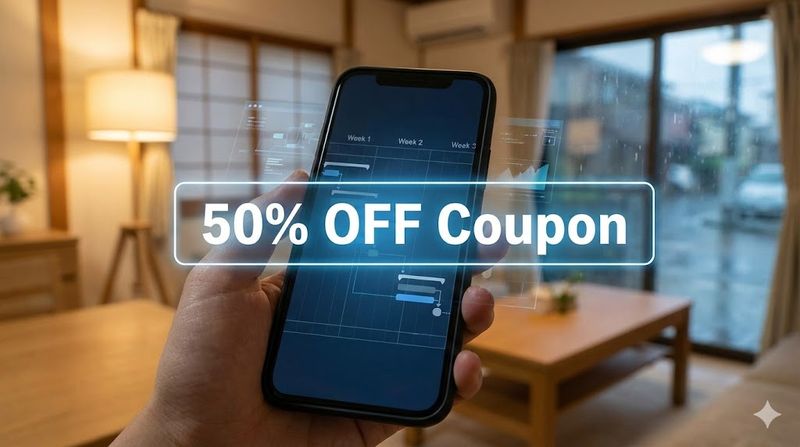
- Week 1: Rocket Now & Uber Eats
Start with the high-reward referral codes. Rocket Now often gives ¥1,000 OFF tickets for referrals. Uber Eats also offers ¥1,500+ OFF for first-time users.
- Week 2: Wolt
Wolt is known for "Continuous Coupons" (e.g., ¥1,000 OFF for your first 3 orders). Use this for your daily lunches.
- Week 3: Free Subscription Trials
Activate the "1-Month Free Trial" for subscriptions like Uber One to eliminate delivery fees entirely.
2026 Guide: Cost of Living in Tokyo (¥140k+)
The reality of rent, utilities, and food inflation. Plus, the 'Year 2 Residence Tax' trap many foreigners miss.
No Credit Card? Use "Delis" for Pay Later
The biggest hurdles for newly arrived foreigners are "Credit Card Screening" and "Lack of Cash." You have a few days until payday, but no cash on hand. This is where Delis becomes a lifesaver.
Why Delis is your "Safety Net"
- No Credit Card Needed: Accepts "atone" (Pay next month at a convenience store), Paidy, and Carrier Billing. You can eat now and pay later.
- Combined Orders: Order curry, tonkatsu, and ramen from different specialty brands in one single delivery. Perfect for share house parties.
- Flexible Screening: Often requires just a mobile number and Residence Card, making it accessible even if you don't have a Japanese bank account yet.
If you can't make a Japanese credit card yet or are tight on cash this month, Delis is your lifeline.
Order Now, Pay Next Month
No cash? No problem. Get hearty meals delivered now and pay later at the convenience store.
Don't Carry Heavy Water! Buy Time with "OniGO"
It's the era of delivering not just meals, but groceries too. Especially for foreigners without a car, carrying 5kg of rice or 2L water bottles from the supermarket is exhausting.
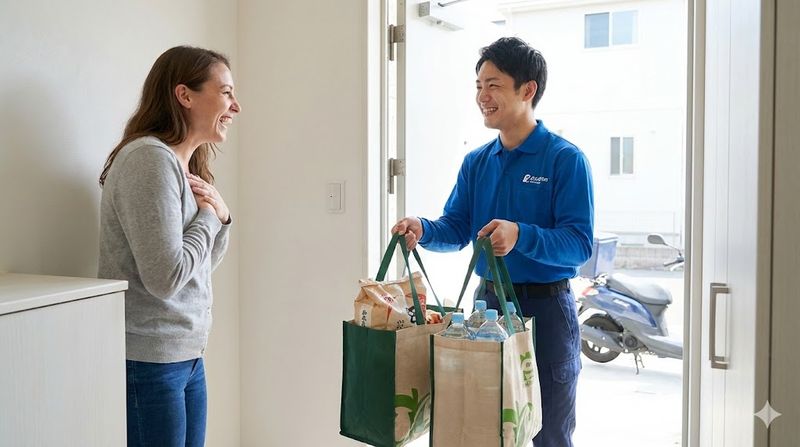
3 Reasons to Use OniGO
- Arrives in 10 Minutes: Realized you're out of eggs while cooking? They'll be there before you finish chopping vegetables.
- Buy Costco Items: You can buy popular Costco bread and deli items in small portions without a membership card. This is huge for the expat community.
- Powerful First Coupons: First-time users often get 40% OFF. This creates a "reverse phenomenon" where delivery is actually cheaper than going to the supermarket.
Water, rice, toilet paper. Don't carry these yourself. Let OniGO handle it and buy yourself some free time.
Get Ito-Yokado Items via OniGO
Supermarket selection delivered in 20 mins. Fresh food and daily necessities at shocking speed.
Avoiding Lost Drivers: Address Input & Japanese Templates
The Japanese address system (Chome-Banchi-Go) is complex, and Google Maps pins often glitch. To avoid the dreaded phone call from a confused driver (in Japanese!), follow these steps.
1. The Correct Address Format
Input your address in the Japanese order (Jinnan 1-2-3), not the Western order (1-2-3 Jinnan). Never omit the Building Name.
2. Copy & Paste these into "Note to Driver"
Copy these Japanese phrases and paste them into the app's "Note" field.
- If you have an Auto-lock:
"Auto-lock. Please ring intercom to enter."
「オートロックです。インターホンを鳴らして解錠してください」
- If you want "Leave at Door":
"Please leave at door. No intercom needed."
「玄関前に置いてください。チャイムは不要です」
- If you only speak English:
"I do not speak Japanese."
「日本語が話せません」
Payments & Japan's Cashless Scene
Finally, a tip on payments.
- PayPay: Accepted by almost all delivery apps. Link it to your bank account for easy charging.
- Cash on Delivery: Possible, but not recommended. Drivers may not have change, and it requires face-to-face interaction.
- Overseas Credit Cards: Uber Eats and Wolt accept them readily, but ensure your 3D Secure (identity verification) is set up, or the transaction might fail.
Japan Mobile Payment Guide: PayPay vs Rakuten Pay
Why are these two essential? We explain how to use foreign cards and maximize point rewards.
Conclusion: Use Them Wisely to Start Your Japan Life
Food delivery in Japan is a powerful tool to survive your first month.
- Uber Eats for your daily infrastructure.
- Delis for "Pay Later" emergencies.
- OniGO for heavy groceries and instant delivery.
By mastering these, you can get warm meals without worrying about the language barrier or lack of funds. Start by using a coupon to get tonight's dinner for a bargain.
Order Now with Coupons
Don't carry heavy bags. Eat even without cash. Start a smart life in Japan with OniGO and Delis.